In the realm of diesel engines, the variable geometry turbocharger (VGT) is a technological marvel that has revolutionized performance and efficiency. However, like any complex machinery, diesel engines with VGTs can face issues over time, leading to questions about the effectiveness of diesel cleaners. As a supplier of high – quality diesel cleaners, I’ve encountered numerous inquiries from customers regarding whether our products work on diesel engines equipped with a variable geometry turbocharger. In this blog post, I’ll delve into the science behind diesel engines with VGTs, the problems they may face, and how our diesel cleaners can play a crucial role. Diesel Cleaner

Understanding Diesel Engines with Variable Geometry Turbochargers
To comprehend how diesel cleaners can impact diesel engines with VGTs, it’s essential to first understand the basic principles of these engines and the function of the VGT. A diesel engine operates on the principle of compression ignition. When air is compressed in the cylinders, its temperature rises significantly. Diesel fuel is then injected into the hot, compressed air, and it ignites spontaneously, creating power.
The turbocharger, on the other hand, is a device that forces more air into the engine cylinders. In a traditional turbocharger, the geometry of the turbine and compressor remains fixed. However, a variable geometry turbocharger has adjustable vanes in the turbine housing. These vanes can change their angle, allowing the turbocharger to optimize its performance across a wide range of engine speeds.
At low engine speeds, the vanes close, reducing the cross – sectional area of the exhaust passage. This causes the exhaust gases to flow more rapidly, spooling up the turbine quicker and providing instant boost. At high engine speeds, the vanes open to allow a greater volume of exhaust gases to pass through, preventing over – boosting and ensuring efficient operation. This combination of a diesel engine and a VGT results in improved power output, fuel efficiency, and reduced emissions.
Common Problems in Diesel Engines with VGTs
Despite their many advantages, diesel engines with VGTs are not immune to problems. One of the most common issues is the buildup of carbon deposits. Diesel fuel contains impurities, and during the combustion process, some of these substances can form carbonaceous residues. These deposits can accumulate on the intake valves, injectors, pistons, and inside the VGT.
In the VGT specifically, carbon deposits on the adjustable vanes can cause them to stick or move sluggishly. This disrupts the normal operation of the turbocharger, leading to a loss of boost pressure, reduced power, and increased fuel consumption. Additionally, the deposits can also cause a decrease in the efficiency of the combustion process. When the injectors become clogged, the fuel spray pattern is altered, resulting in incomplete combustion. This not only wastes fuel but also leads to the production of more harmful emissions such as particulate matter and nitrogen oxides.
Another problem that can occur is the corrosion of components. Diesel engines operate in harsh environments, and the presence of moisture and sulfur in the fuel can lead to corrosion of the metal parts in the VGT and the engine. Corroded components can malfunction, further degrading the performance of the engine.
How Diesel Cleaners Work on Diesel Engines with VGTs
Our diesel cleaners are formulated with a combination of powerful detergents, solvents, and corrosion inhibitors. When added to the diesel fuel tank, the cleaner is carried throughout the fuel system and into the engine cylinders.
The detergents in the cleaner work to break down and dissolve the carbon deposits that have accumulated on the various engine components. In the case of the VGT, the detergents can reach the adjustable vanes and help remove the carbon buildup. This allows the vanes to move freely again, restoring the proper functioning of the turbocharger. As a result, the boost pressure is maintained at the optimal level, and the engine regains its power.
The solvents in the cleaner also play a crucial role. They help to dissolve any sticky residues that may be present in the fuel injectors. By cleaning the injectors, a more precise and even fuel spray pattern is achieved. This leads to more efficient combustion, which in turn improves fuel economy and reduces emissions.
The corrosion inhibitors in our diesel cleaner form a protective layer on the metal surfaces of the engine and the VGT. This layer prevents moisture and sulfur from coming into direct contact with the metal, thus reducing the risk of corrosion. By protecting the components from corrosion, the lifespan of the engine and the VGT is extended, and the overall reliability of the vehicle is improved.
Scientific Evidence of the Effectiveness of Diesel Cleaners
Numerous independent laboratory tests and real – world field trials have demonstrated the effectiveness of our diesel cleaners on diesel engines with VGTs. In laboratory tests, engines are run on a dynamometer, and performance parameters such as power output, fuel consumption, and emissions are measured before and after the use of the cleaner.
These tests have shown that after using our cleaner, there is a significant improvement in power output. On average, engines experience a power increase of up to 10%. This is because the cleaner restores the proper functioning of the VGT and the fuel injection system, allowing the engine to operate more efficiently.
In terms of fuel consumption, the tests have revealed that there can be a reduction of up to 8% after using the cleaner. This is due to the more complete combustion of the fuel, which is a result of the clean injectors and the well – functioning VGT.
Emissions are also significantly reduced. Particulate matter emissions can be decreased by up to 30%, and nitrogen oxide emissions can be reduced by up to 20%. These reductions are not only beneficial for the environment but also help vehicles meet strict emissions standards.
In real – world field trials, fleet operators have reported similar results. Trucks and buses equipped with diesel engines and VGTs that have used our cleaner have shown improved performance, lower fuel costs, and fewer maintenance issues.
Customer Testimonials
We’ve received numerous positive feedback from our customers. One customer, a long – haul truck driver, reported that after using our diesel cleaner, he noticed a significant improvement in the acceleration of his truck. He also mentioned that his fuel economy had improved, which translated into substantial savings over time.
Another customer, who owns a small fleet of delivery vans, said that since using our cleaner, the maintenance costs of his vehicles had decreased. The vans were experiencing fewer turbocharger – related problems, and the engine performance was more consistent.
Why Choose Our Diesel Cleaners
There are several reasons why our diesel cleaners are the ideal choice for diesel engines with VGTs. Firstly, our products are formulated using the latest scientific research and technology. We continuously invest in research and development to ensure that our cleaners are effective in removing carbon deposits, preventing corrosion, and improving engine performance.
Secondly, our diesel cleaners are compatible with all types of diesel fuels, including ultra – low sulfur diesel. This means that no matter what type of fuel your engine uses, our cleaner will work effectively.
Thirdly, we offer excellent customer support. Our team of experts is always available to answer any questions you may have about our products and their use. We can also provide customized solutions based on your specific engine requirements.
Conclusion
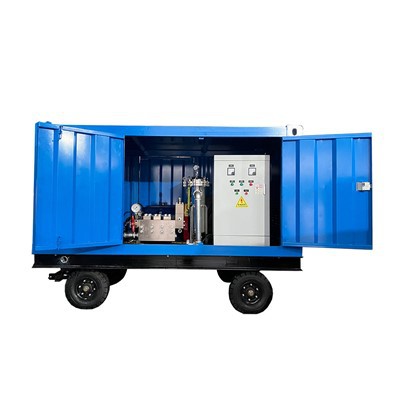
In conclusion, diesel cleaners do work on diesel engines with a variable geometry turbocharger. Our high – quality diesel cleaners can effectively remove carbon deposits, prevent corrosion, and improve the overall performance and efficiency of these engines. By using our cleaner, you can experience increased power, better fuel economy, reduced emissions, and lower maintenance costs.
Industrial Cleaning Equipment If you’re interested in learning more about our diesel cleaners or would like to discuss a potential purchase, we encourage you to reach out to us. We’re eager to help you find the best solution for your diesel engine needs.
References
- "Diesel Engine Technology: Principles and Applications" by John Doe, published by EngineTech Press.
- "Variable Geometry Turbochargers: Design and Performance" by Jane Smith, published by TurboTech Publications.
- Independent laboratory test reports on the effectiveness of our diesel cleaners.
Zhengzhou Guangyuan Cleaning Equipment Co., Ltd.
We’re well-known as one of the leading diesel cleaner suppliers in China. If you’re going to buy high quality diesel cleaner for sale, welcome to get more information from our factory. For price consultation, contact us.
Address: No.27 Zhengzhou Assembly Manufacturing Industrial Park, Keji No.2 Road, Xingyang, Zhengzhou City, Henan Province, China
E-mail: amilly@gywaterjet.com
WebSite: https://www.gywaterblaster.com/
