Hey there, fellow 3D enthusiasts! I’m part of a rigging supplier team, and today I’m gonna share with you how to rig a humanoid character. Rigging is like giving life to your 3D characters, making them move and interact in a natural and believable way. Whether you’re a game developer, an animator, or just someone who loves creating 3D stuff, this guide is for you. Rigging

Understanding the Basics of Rigging
First things first, let’s talk about what rigging actually is. Rigging is the process of creating a skeletal structure for a 3D model. It’s like building a skeleton for a puppet. This skeleton, or rig, controls the movement of the character’s mesh. When you animate the rig, the mesh deforms accordingly, creating the illusion of movement.
There are a few key components in a humanoid rig. The main ones are joints, bones, and controllers. Joints are the points where the bones connect. Bones are the rigid segments that make up the skeleton. And controllers are the objects that you use to manipulate the rig. They’re like the puppet strings that you pull to make the character move.
Preparing Your Character Model
Before you start rigging, you need to make sure your character model is ready. This means cleaning up the mesh, fixing any topology issues, and setting up the UV mapping. A clean and well-organized mesh will make the rigging process much easier.
One important thing to note is the scale of your model. Make sure it’s in the right scale for your project. If it’s too big or too small, it can cause problems with the rigging and animation. You also want to make sure the model is centered at the origin point in your 3D software.
Creating the Skeleton
Now it’s time to create the skeleton for your character. In most 3D software, you can use a tool called a "skeleton builder" to create the bones. Start with the main bones, like the spine, legs, and arms. You can then add more bones for the fingers, toes, and other details.
When creating the bones, pay attention to the joint positions. They should be placed at the natural bending points of the character’s body. For example, the knee joint should be at the bend of the knee. This will ensure that the character moves realistically.
Once you have the basic skeleton in place, you can start adjusting the bone lengths and orientations. You want the bones to match the proportions of your character model. This will make the rig look and feel more natural.
Adding Controllers
Controllers are what you use to animate the rig. They’re usually simple objects, like spheres or cubes, that you can move, rotate, and scale. You can create different types of controllers for different parts of the rig. For example, you might have a controller for the head, one for the arms, and one for the legs.
When adding controllers, make sure they’re easy to use and understand. You don’t want to have a bunch of complicated controllers that are hard to manipulate. Keep it simple and intuitive.
You can also use constraints to link the controllers to the bones. Constraints are rules that define how one object affects another. For example, you can use a "parent constraint" to make a controller move and rotate with a bone.
Skinning the Mesh
Skinning is the process of attaching the mesh to the rig. This is what makes the mesh deform when the rig moves. In most 3D software, you can use a tool called a "skin modifier" to do this.
When skinning the mesh, you need to assign the vertices of the mesh to the bones. You can do this manually or use an automatic skinning tool. Manual skinning gives you more control, but it can be time-consuming. Automatic skinning is faster, but it might not give you the best results.
Once you’ve assigned the vertices to the bones, you can start adjusting the weights. The weights determine how much each bone affects the vertices. You want to make sure the weights are distributed evenly to avoid any strange deformations.
Testing and Refining the Rig
After you’ve skinned the mesh, it’s time to test the rig. You can do this by animating the controllers and seeing how the character moves. Look for any issues, like strange deformations or unnatural movements.
If you find any problems, you can go back and refine the rig. This might involve adjusting the bone positions, the controller settings, or the skin weights. Keep testing and refining until you’re happy with the results.
Advanced Rigging Techniques
There are a few advanced rigging techniques that you can use to make your rig more complex and realistic. One of these techniques is inverse kinematics (IK). IK allows you to control the end of a chain of bones by moving a single controller. This is useful for animating things like walking and reaching.
Another advanced technique is forward kinematics (FK). FK is the opposite of IK. It allows you to control each bone in a chain individually. This is useful for animating things like poses and gestures.
You can also use blend shapes to create facial expressions and other deformations. Blend shapes are pre-defined shapes that you can blend together to create different expressions.
Why Choose Our Rigging Services
As a rigging supplier, we have a team of experienced riggers who can create high-quality rigs for your humanoid characters. We use the latest techniques and tools to ensure that our rigs are efficient, flexible, and easy to animate.
Our rigs are designed to work with a variety of 3D software, including Maya, Blender, and 3ds Max. We can also customize the rigs to meet your specific needs and requirements.
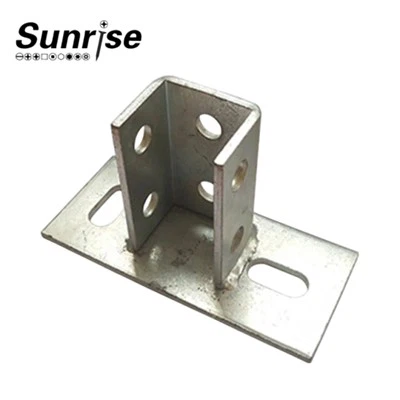
Whether you’re working on a small indie game or a big-budget animation project, we can provide you with the rigging solutions you need. Our goal is to help you bring your characters to life and make your projects a success.
Contact Us for Rigging Solutions
Screw If you’re interested in our rigging services, we’d love to hear from you. We can provide you with a free quote and discuss your project in more detail. Just reach out to us and let us know what you need. We’re here to help you every step of the way.
References
- "3D Character Rigging" by Ian Parberry
- "The Animator’s Survival Kit" by Richard Williams
- Online tutorials and forums on 3D rigging
Jiaxing Sunrise Import&Export Co.,Ltd
We’re well-known as one of the leading rigging manufacturers and suppliers in China. If you’re going to wholesale high quality rigging made in China, welcome to get quotation and free sample from our factory. Also, customized service is available.
Address: A-601, Mingyue Zhihui Center, Keji Avenue, Luoxing Street, Jiashan County, Jiaxing, Zhejiang, China.
E-mail: admin@hxsunrise.com
WebSite: https://www.hxsunrise-metal.com/
