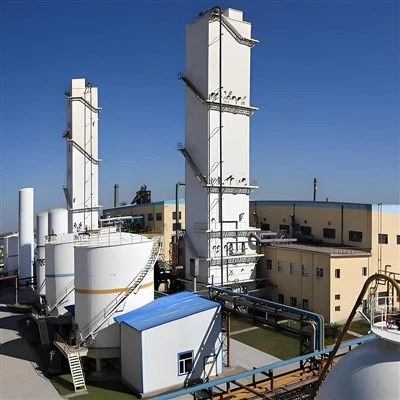
Hey there! I’m an air separation unit (ASU) supplier, and today I wanna talk about something that doesn’t get as much airtime as the benefits of ASUs – the disadvantages. Now, don’t get me wrong, I’m all about the amazing things these units can do, but it’s important to be upfront about the downsides too. Air Separation Unit
High Initial Investment
First off, one of the biggest drawbacks of using an ASU is the high initial investment. These things aren’t cheap! You’re looking at a hefty price tag to purchase the unit itself, and that’s not even including the costs of installation, commissioning, and getting all the necessary permits. It’s like buying a fancy sports car – it might be awesome, but it’s gonna cost you a fortune upfront.
For small and medium – sized businesses, this can be a real deal – breaker. They might not have the capital to shell out for an ASU, and even if they do, it ties up a lot of their resources. It could mean they have less money to invest in other areas of the business, like research and development or marketing. And let’s not forget about the financing. Taking out a loan to buy an ASU means you’ll be paying interest on top of the principal amount, which can add up over time.
Energy Consumption
Another major disadvantage is the high energy consumption of ASUs. These units work by cooling air to extremely low temperatures to separate its components, like nitrogen, oxygen, and argon. And that cooling process takes a ton of energy. It’s like running a giant freezer 24/7.
High energy consumption not only means higher electricity bills but also has an environmental impact. In today’s world, where everyone’s talking about going green, the large carbon footprint of ASUs can be a real problem. Some companies are under pressure from customers, investors, and regulators to reduce their environmental impact, and the energy – hungry nature of ASUs can make it difficult for them to meet these goals.
Maintenance and Downtime
ASUs are complex pieces of equipment, and they require regular maintenance to keep them running smoothly. You’ve got to check the compressors, heat exchangers, and other components on a regular basis to make sure everything’s in good working order. And when something goes wrong, it can be a real headache.
Maintenance can be expensive. You need to hire trained technicians, buy replacement parts, and sometimes even shut down the unit for a while. Downtime is a big deal because it means you’re not producing any of the gases you need. For industries that rely on a continuous supply of oxygen, nitrogen, or argon, like the steel or chemical industries, even a few hours of downtime can result in lost production and revenue.
Safety Risks
There are also some safety risks associated with using ASUs. The gases produced by these units, such as oxygen and nitrogen, can be dangerous if not handled properly. Oxygen is highly flammable, and if there’s a leak in the system, it can create a fire hazard. Nitrogen, on the other hand, is an asphyxiant. If it leaks into an enclosed space, it can displace oxygen and cause people to suffocate.
To deal with these risks, companies need to invest in safety equipment and training for their employees. They’ve got to have proper ventilation systems in place, and workers need to know how to handle the gases safely. This adds to the overall cost of operating an ASU and can be a hassle for companies, especially those that are new to using these units.
Limited Flexibility
ASUs are designed to produce a specific amount and type of gases. Once they’re set up, it can be difficult to change the production capacity or the mix of gases they produce. For example, if a company’s demand for oxygen suddenly increases, it might not be easy to ramp up the production of an existing ASU. They might need to invest in additional equipment, which means more money and more time.
This lack of flexibility can be a problem in industries where demand is volatile. Companies need to be able to adjust their production quickly to meet changing market conditions, and the inflexibility of ASUs can make that challenging.
Technical Expertise
Operating an ASU requires a high level of technical expertise. Workers need to understand how the unit works, how to monitor its performance, and how to troubleshoot problems when they arise. Finding and training skilled workers can be a challenge, especially in areas where there’s a shortage of technical talent.
If the operators don’t have the right skills, it can lead to inefficient operation of the ASU, which means higher energy consumption and lower product quality. And in the worst – case scenario, it can result in safety incidents.
Market Competition
The ASU market is highly competitive. There are a lot of suppliers out there, and customers have plenty of options to choose from. This means that as a supplier, we’ve got to work hard to differentiate ourselves and offer competitive prices.
For customers, this competition can be a double – edged sword. On one hand, it can lead to lower prices and better service. On the other hand, it can also mean that some suppliers might cut corners on quality to offer lower prices. And if a customer ends up with a low – quality ASU, they’re gonna face even more problems down the road, like more frequent breakdowns and higher maintenance costs.
Conclusion
So, there you have it – the disadvantages of using an air separation unit. High initial investment, energy consumption, maintenance and downtime, safety risks, limited flexibility, the need for technical expertise, and market competition are all factors that companies need to consider when deciding whether to use an ASU.
But don’t let these disadvantages scare you off completely. ASUs are still incredibly useful pieces of equipment, and they can provide a reliable source of high – purity gases for a wide range of industries. At the end of the day, it’s all about weighing the pros and cons and making an informed decision.
Cryogenic Oxygen Plant If you’re thinking about purchasing an air separation unit, I’d love to have a chat with you. We can discuss your specific needs, and I can help you figure out the best solution for your business. Whether you can work around these disadvantages or if you’re okay with taking them on in exchange for the benefits of an ASU, I’m here to assist. So, reach out and let’s start the conversation about how an ASU can fit into your operations.
References
- Perry, R. H., & Green, D. W. (Eds.). (1997). Perry’s Chemical Engineers’ Handbook. McGraw – Hill.
- Kohl, A. L., & Nielsen, R. B. (1997). Gas Purification. Gulf Publishing Company.
Newteck (Hangzhou) Energy Technology Co., Ltd
We’re professional air separation unit manufacturers and suppliers in China, specialized in providing high quality products and service. We warmly welcome you to buy air separation unit made in China here from our factory.
Address: Room 8008-8016, Flat No.2, Taotiandi Business Plaza, Hangzhou, China.
E-mail: inquiry@newtekcryogenic.com
WebSite: https://www.newtekcryogenic.com/
