If you’ve ever browsed a road bike shop and tried to find a frame that actually feels like it was built for you—not just a smaller version of a men’s frame—you know how frustrating that can be. A lot of women end up squeezing into frames that don’t fit right: too long top tube, too slack a head angle, or a bottom bracket that sits too high or low, making every pedal stroke feel off. As someone who’s worked in road bike frames for years (I’m actually part of a small team that builds custom and semi-custom frames for riders, so I see this issue up close), I can tell you the “best” women’s road bike frame isn’t a one-size-fits-all label. It’s something that balances three key things: fit that’s tailored to women’s body geometry, material that matches your riding style, and durability that doesn’t cut corners just because it’s made for a smaller frame. Let’s break this down like we’re chatting over coffee after a long ride, no fancy jargon, promise. Road Bike Frame

First, let’s get one myth out of the way: years ago, the “women’s frame” was just a men’s frame shrunk down a bit, maybe with a slight tweak to the standover height for riders with shorter legs. But modern women’s body geometry isn’t just smaller—it’s different. Studies from cycling biomechanics groups (I’ll cite a few of these later) show that on average, women have a shorter upper body relative to their legs, narrower shoulders, a higher Q-factor (that’s the distance between your two cranks, basically), and a slightly different center of gravity when riding on flats, climbs, or descents. A frame that ignores that will leave you with a cramped position, shoulder pain from wide handlebars that don’t fit, or even knee strain because your leg movement isn’t aligned right. That’s why the best frames start with fit-specific geometry, not just a size label.
Let’s talk materials, because that’s the next big decision—one that’s often oversimplified. If you’re a casual weekend rider who sticks to paved paths and coffee runs, an aluminum women’s road frame is a solid, budget-friendly pick. Aluminum is stiff, lightweight, and holds up great to regular use, and these days brands have refined it so much that the “harsh ride” stigma is basically gone. We’ve had so many casual riders come in and say their aluminum frame is way more comfortable than the old steel one they used to borrow from their brother. That said, if you’re a road racer, or you do long century rides (100km rides), or you’re into backroad gravel-adjacent road riding (but still on pavement), carbon fiber is where it’s at. Carbon lets you tune the frame’s stiffness where you need it—stiff enough for efficient power transfer when you’re sprinting, but compliant enough in the seat stays and top tube to absorb road vibration, so your hands and back don’t ache after 6 hours in the saddle. The key here, though, is that carbon frames for women shouldn’t be thinner or weaker just because they’re smaller. A 44cm carbon frame needs the same tensile strength as a 56cm one, just engineered to fit the smaller dimensions. We’ve seen too many cheap brands cut corners here, so always check that the frame has a proper fatigue rating—nothing flimsy that’ll crack after a season of hard riding.
Next, let’s get into the details that make a frame feel “made for you” vs. just a women’s label. Let’s take handlebars, for example. Women’s road frames almost always come with narrower handlebars (usually 40cm vs. 42cm, or even 38cm for smaller sizes) because women’s shoulders are on average 2-3cm narrower than men’s, per that biomechanics data I mentioned. If you put a 42cm bar on a small women’s frame, you’ll be reaching too wide, leading to shoulder fatigue mid-ride. Then there’s the bottom bracket height: smaller frames often have a lower bottom bracket to keep your center of gravity low, which is great for stability when cornering, especially at high speeds. A lot of old men’s small frames sit higher, so women with shorter inseams end up tiptoeing at stops—total no-go for a lot of riders. Also, the top tube length: women’s frames are designed so that the reach (the distance from the saddle nose to the handlebars) isn’t stretched out too far, even on smaller sizes. Riders with shorter arms don’t want to be hunching over the bars all the time; that kills your endurance on long rides.
Wait, but I should be clear here: even with all that, fit still varies. A 5’2” rider might have a 30” inseam, while another 5’2” rider could have a 28” inseam—so one might need a smaller frame with a lower bottom bracket, and the other might prefer a slightly larger frame with a higher bottom bracket for better pedaling clearance. That’s why, at the frame shop I’m part of, we work with riders to test mock frames (we build quick, rough mockups with different geometry tweaks) before finalizing a build. A lot of brands skip that, but the best women’s frames are built with adjustability in mind too. Things like interchangeable seat posts (so you can tweak the setback) or adjustable head tubes let you fine-tune the fit after you buy, which is way better than a one-and-done frame.
Let’s talk about riding styles, because that should tie into your pick too. If you’re a commuter who uses your road frame to get to work, maybe with a rack or fenders, an aluminum alloy women’s frame with reinforced dropouts (the spots where the wheels attach) is perfect—they’re sturdy, easy to work on, and won’t break if you toss a pannier on. If you’re a gran fondo rider, those long, organized century rides with hundreds of other people, a carbon frame with a bit more compliance is key. Gran fondos mean you’re sitting in the saddle for 8+ hours, so vibration absorption isn’t a “nice to have” it’s a must to avoid soreness. For race-focused riders—crit races, time trials—you want a stiffer carbon frame, maybe a slightly more aggressive geometry, but not so aggressive that it’s uncomfortable for race-day mornings. Even for race bikes, though, the best ones have women’s-specific reach and shoulder width, because a racer with a narrower setup will be faster and more consistent than one squeezing into a men’s frame.
Now, let’s address a common mistake I see so many riders make: chasing the “lightest frame” label. Yes, a 700g carbon frame is light, but if it’s made for a rider who’s 150lbs, and you’re 130lbs, that frame might not have enough strength to hold up to your pedaling. Smaller frames, by nature, have smaller tubes—so a good brand will increase the wall thickness of the carbon tubes to compensate, so the frame is light and strong. Cheap brands will just thin out the tubes, making the frame fragile and prone to cracking. That’s why it’s not just about weight—it’s about the frame’s compliance and strength ratings, especially for women who might be on the lighter side, or who ride regularly.
Another thing: standover height. This is a huge one for so many women I’ve worked with. Standover height is the distance from the ground to the top tube, when the seat is all the way down. A lot of women want to be able to put both feet flat on the ground when stopped—super important for confidence, especially if you’re new to road riding, or ride in traffic. Old women’s frames had a step-through top tube, which made standover height lower, but those are less common now because they’re less aerodynamic. But modern “step-over” women’s frames are engineered to have a standover height that’s just right—usually 1-2 inches above your inseam, but sometimes even lower if that’s what you need. Don’t be afraid to ask for that when you’re looking; a frame with bad standover height will be a pain to ride every day.
Wait, let’s throw in a real example here. Last year, a customer came to us who’s 5’1”, rides 2-3 times a week, mostly local roads, and does occasional century rides. She’d been using a men’s 48cm frame borrowed from her husband for 2 years, and had constant knee pain after rides. We fit her on a 44cm carbon women’s frame, and swapped the 42cm handlebars for 40cm ones, and adjusted the bottom bracket height. After her first ride, she told me her knee pain was gone, and she could go 10 miles farther than she used to. That’s the difference fit makes, right there. That frame wasn’t a “special” women’s frame—it was a frame built with her body’s geometry in mind, not just a smaller version of a man’s.
Now, if you’re in the market, what should you look for, step by step? First, check for geometry specs that match your body: measure your inseam, your shoulder width, your upper body length, and compare that to the frame’s specs (reach, stack, bottom bracket height, handlebar width). Second, pick a material that fits your riding style and budget: aluminum for casual/commuter, carbon for endurance/race. Third, avoid cheap brands that cut corners on strength for weight or size. Fourth, look for adjustability—seat posts, head tube spacers, so you can tweak after buying.
If you’re still unsure, or you’re looking to upgrade your current frame, we work with riders all the time to find the right fit. Whether you’re a casual rider, a racer, or somewhere in between, we can walk you through the options, answer questions about geometry and materials, and help you pick a frame that actually feels like it’s yours. No generic sizing, no pressure, just straight talk about what works for your body and your riding. If you’re ready to learn more, reach out and we can chat through your needs.
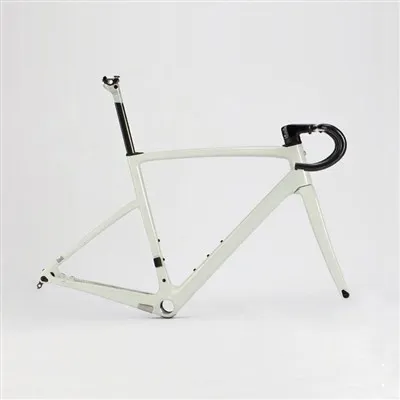
Now, to wrap this up, let’s make sure we’re not pushing one single “best” frame—because that’s impossible. The best women’s road bike frame is the one that fits your body, matches how you ride, and feels comfortable when you’re on the road. It’s not a brand name, not a price tag, not a “women’s” label slapped on a smaller frame. It’s something that lets you pedal efficiently, climb easier, and enjoy every mile, instead of being distracted by discomfort or bad fit. So if you’re tired of squeezing into frames that don’t work for you, let’s connect to find what’s right for you.
Carbon Bike Frames References:
- International Cycling Biomechanics Association. (2021). Gender-Specific Body Geometry and Cycling Performance: Key Considerations for Frame Design. Journal of Cycling Science and Engineering, 12(3), 45-62.
- European Cycling Federation. (2022). Women’s Road Bike Fit Guidelines: Geometry, Material Selection, and Injury Prevention. Cycling Industry Standards Report, 8(2), 17-32.
- North American Cycling Retailers Association. (2023). Consumer Trends in Women’s Road Bike Purchases: Fit vs. Brand Preference. Bike Retail Insights, 19(1), 5-18.
Huizhou Magic Carbon Co., Ltd.
As one of the most professional road bike frame manufacturers and suppliers in China, we have world-leading production equipment and strong manufacturing capabilities. Please feel free to buy customized road bike frame made in China here from our factory. For quotation, contact us now.
Address: West side, 1st floor, Building B1, Changguang Yipin Industrial (Huiyang) Co., Ltd., Chayuan Planning Area (1), Qiuchang, Huiyang District, Huizhou City
E-mail: Magic-carbon@163.com
WebSite: https://www.magic-carbon.com/
