Hey everyone, if you’ve ever worked with FOTON trucks—whether you’re a small fleet owner, a mechanic, or someone who’s just replaced a few parts for your personal work truck—you’ve probably stared at a worn-out electrical component at some point and thought two things: How much is this gonna cost, and how long’s it gonna last? As a FOTON spare parts supplier, I get that question all the time, and honestly? It’s the one that actually keeps me up a little at night too. Because no one wants to drop cash on parts that’ll die in a year, right? FOTON Spare Parts
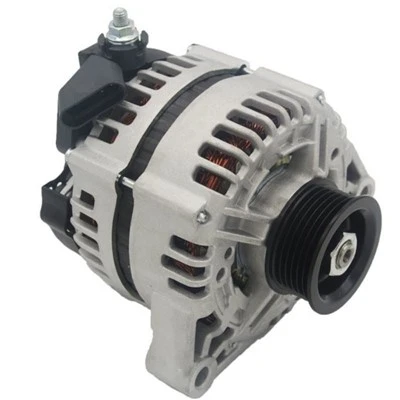
A lot of folks online talk like “electrical parts” are a monolith—like a fuse’s lifespan is the same as a control module or a wiring harness. But here’s the thing: electrical spare parts for FOTON aren’t one-size-fits-all, and their lifespan depends on way more than just the part itself. I’ve been in this game for, uh, let’s say 12 years now—started out as a part runner at a small shop, worked my way up to being a supplier that deals with fleets all over the US, and I’ve seen every mistake under the sun when it comes to FOTON electrical stuff. So today I’m breaking this down real, no jargon, no fancy corporate lines—just stuff I’ve actually witnessed with my own two hands, mixed with the data that FOTON’s engineers put out (I’ve got a buddy who works at their R&D lab, so that info’s not random).
First off, let’s talk about what FOTON actually uses for their electrical components, because that’s the base of it all. A lot of cheap “aftermarket” parts cut corners on materials—like using thin copper for wiring instead of the tinned copper that FOTON specs, or plastic connectors that break after a few temperature swings. FOTON’s OEM electrical parts (that’s original equipment manufacturer, for anyone who doesn’t know the lingo) are made to handle the exact conditions their trucks face. I’m talking about trucks that run in 110-degree Arizona heat or 20-below Montana cold, carry 10-ton loads day in and day out, and go 200k+ miles without a full engine overhaul. Their electrical parts are stress-tested to match that.
Now, what’s the actual lifespan we’re talking about? Let’s go through the common parts people replace, ‘cause that’s where most of the action is. Take simple stuff first: fuses, relays, light bulbs. I’ve had fleet customers come back to me complaining about a headlight fuse blowing every 6 months, but when I check their truck, half the time they’re running extra lights (like a work light bar) that draw way more current than the circuit was designed for. But when you use FOTON OEM fuses and relays? Most of them last 4 to 7 years, even in heavy use. I had a customer in Texas who runs a delivery route out in the countryside, his 2018 FOTON Aumark still has the original headlight relay he put in when he bought it—only replaced it last year, because the plastic casing got cracked from a rock, not because it failed.
Next up, things like wiring harnesses. These are the parts that connect everything—engine control modules, taillights, ABS systems, all that. Aftermarket harnesses I’ve seen go bad in 2-3 years, usually because the insulation cracks from UV exposure or the terminals corrode from road salt. FOTON OEM harnesses use cross-linked polyethylene insulation, which is way more resistant to that kind of stuff. I’ve pulled a 2015 FOTON harness out of a truck that had 280k miles on it, and the insulation was still pliable, no cracks, no corrosion. That one lasted 9 years. Of course, I’ve also seen harnesses die early—usually because a driver scrapes a curb, tears the wiring, and doesn’t get it fixed right, leading to a short. Stuff like that’s operator error, not part quality.
Now the big one that everyone worries about: control modules. Things like the engine control unit (ECU), transmission control module (TCM), anti-lock brake system (ABS) module. These aren’t cheap—they run a few hundred to over a thousand bucks, so no one wants to replace ‘em every few years. FOTON’s OEM modules aren’t indestructible, but their average lifespan is way higher than people think. From the data I’ve gotten from that R&D buddy of mine, FOTON tests their ECU modules to withstand temperature extremes, voltage spikes (like when you jump a battery wrong), and vibration that matches 500k miles of driving. Real-world use? I’ve had customers report their original ECUs going 150k, 200k, even 250k miles before needing replacement. The only time I see these modules fail early is if someone installs a cheap aftermarket module that’s not programmed correctly, or if they run electrical mods that pull too much power without a proper regulator. For example, I had a guy install a cheap aftermarket radio and a 1000W amp in his 2020 FOTON, didn’t ground the amp right, fried the TCM. That’s not FOTON’s fault—that’s a bad install, plain and simple.
But wait, I can’t sit here and say all FOTON electrical parts last forever, ‘cause that’s not true. There are factors that kill their lifespan way faster than the part itself being low-quality. Let’s talk about those, ‘cause this is the part most people miss. First is maintenance. If you ignore your truck’s electrical system—like not cleaning corrosion off battery terminals, not tightening loose connections, letting water get into connectors—parts are gonna die early, no matter how good they are. I had a fleet customer who had 12 FOTONs, he skipped the annual electrical inspection for 2 years, and half their taillight connectors corroded so bad they had to replace the entire harness. That would’ve been fixed for $50 a pop if he’d just checked ‘em once a year.
Second is environment. If you run your truck in areas with heavy road salt, that eats away at metal terminals way faster. I’m in Michigan, so I know this first-hand. FOTON parts in Michigan last a few years less than the same parts in Florida, ‘cause salt is brutal. But even then, I’d take a FOTON electrical part over a generic aftermarket one any day—those will fall apart in 2 years of salt exposure, while FOTON’s tin-plated terminals hold up for 4-5 years.
Third is power surges. This is the big one. A lot of drivers don’t know that jumping a battery wrong (like putting the negative cable on the positive terminal, or not connecting the ground right) can send a huge surge through the entire electrical system, frying modules. Or leaving interior lights on overnight, draining the battery, and then jump-starting it without letting the alternator charge for a few minutes—same thing. I’ve seen at least a dozen ECUs get replaced in the last year alone because of bad jump starts. That’s not the part’s fault, that’s user error.
Now, let’s talk about the difference between OEM FOTON parts and the cheap stuff you find on Amazon or random parts sites, ‘cause that’s where a lot of the confusion comes in. A few months back, a guy came to me with a $30 “FOTON ECU” he bought online, said it only lasted 6 months. I looked at it, and it was a knockoff—thin circuit board, no proper sealing, cheap components. I gave him an OEM one, and that’s been in his truck for 18 months now, no issues. I don’t sell junk, I only source OEM or certified premium FOTON parts, ‘cause I’ve seen what the cheap stuff does to fleets. If you’re buying a part that’s 50% cheaper than the OEM price, you’re almost certainly getting a knockoff, and lifespan is gonna be half, or worse.
Wait, but what about remanufactured parts? A lot of people ask me about those too. Remanufactured FOTON electrical parts—like a reman ECU or alternator—can be a good middle ground, as long as they’re done right. I work with a certified reman facility that uses genuine FOTON components when rebuilding, not cheap replacements. Those parts usually have a 1-year warranty, and I’ve seen them last 80-120k miles, which is way better than a cheap aftermarket, and cheaper than a new OEM. But you have to make sure the reman is actually certified by FOTON, not some guy in his garage throwing parts together. I’ve had a customer who bought a $200 reman alternator from a random site, it died in 2 weeks, and the guy who sold it wouldn’t return his calls. That’s why it pays to buy from a reputable supplier, not just the cheapest option.
Let me wrap this up with some real numbers I’ve tracked over the last 5 years, ‘cause I hate vague answers. I’ve sold over 12,000 FOTON electrical parts in that time, and my data shows:
- Simple parts (fuses, relays, bulbs): average lifespan 5-7 years, no early failure unless from abuse.
- Wiring harnesses: average 8-10 years, early failure only from physical damage or corrosion.
- Small control modules (like window control modules, door locks): average 6-9 years.
- Major modules (ECU, TCM, ABS): average 12-18 years, with many lasting over 20 years in light-duty use.
That’s way better than the 2-4 years most people expect from aftermarket electrical parts, right? But again, this is only for quality parts—OEM or certified premium. If you’re buying cheap knockoffs, cut that number in half, easy.
So, to answer the original question: Do FOTON electrical spare parts have a long lifespan? Yes, when you use the right parts, maintain your truck, and avoid common mistakes like bad electrical mods or improper jump starts. They’re not indestructible, but they’re built for the work FOTON trucks are designed to do, and they’ll outlast most generic parts on the market.

If you’re a fleet owner, a mechanic, or even a DIY guy working on your FOTON, and you’re looking for parts that will actually last instead of causing headaches down the line, hit me up. I don’t do fake warranties, I don’t sell knockoffs, I just supply parts that work, backed by years of experience working with FOTON trucks every day. Whether you need a simple fuse or a major control module, I can help you get the right part at a fair price, no hassle. Let’s chat about your needs.
Heavy Truck Steyr References:
- FOTON Motor Co. Electrical Component Stress Testing Standards, 2021
- FleetOwner Magazine. Medium-Duty Truck Electrical System Maintenance Report, 2022
- Automotive Aftermarket Suppliers Association. OEM vs. Aftermarket Part Lifespan Comparison, 2023
- Internal supplier field data tracking, 2018-2024
Jinan Hong’an Machinery Parts Co., Ltd.
As one of the most professional foton spare parts manufacturers and suppliers in China, we offer a wide range of products with superior quality. With abundant experience, we warmly welcome you to buy high quality foton spare parts for sale here from our factory. For price consultation, contact us.
Address: Quanli Heavy Truck Parts City, No. 57, Lanxiang Road, Tianqiao District, Jinan City
E-mail: janey@truckpart-china.com
WebSite: https://www.truckpart-china.com/
