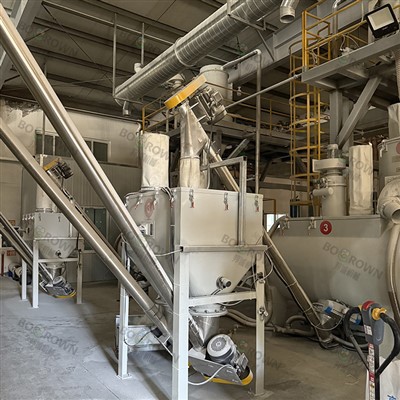
Hey there! I’m a supplier of the PE Centralized Feeding System. You might be wondering, "What types of materials can this system actually handle?" Well, let me break it down for you. PE Centralized Feeding System
Plastic Resins
One of the most common materials that our PE Centralized Feeding System deals with is plastic resins. Yeah, you know, those raw plastics that are used to make all sorts of plastic products. Like polyethylene (PE), of course! There are different types of PE, such as high – density polyethylene (HDPE) and low – density polyethylene (LDPE).
HDPE is super tough and rigid. It’s used to make things like milk jugs, detergent bottles, and piping. The reason our system works so well with HDPE is that it can handle the pellets smoothly. The system’s conveyors and hoppers are designed in a way that they won’t damage these tiny pellets during the feeding process.
LDPE, on the other hand, is more flexible and has a lower melting point. It’s commonly used for making plastic bags, plastic wraps, and squeeze bottles. Our centralized feeding system can adjust the feeding rate according to the characteristics of LDPE. We don’t want to clog up the process, right? So, it makes sure to feed the LDPE at a steady pace to the processing equipment.
But it’s not just PE. We also handle polypropylene (PP). PP is another popular plastic resin. It’s lightweight, has good chemical resistance, and is used in everything from food containers to automotive parts. The feeding system can manage the different particle sizes of PP. Some PP pellets might be a bit larger or smaller than others, but our system can deal with that variation without any hassle.
Additives
Additives are a big deal in the plastic manufacturing industry. They’re used to give plastics certain properties. For example, colorants are additives that give plastic products their colors. Whether it’s a bright red toy or a clear blue water bottle, colorants play a key role.
Our PE Centralized Feeding System can accurately dispense colorants into the plastic resin stream. We know that a little too much or too little colorant can make a big difference in the final product. So, our system uses advanced metering devices to measure the right amount of colorant and mix it evenly with the resin.
Another type of additive is the UV stabilizer. Plastics that are exposed to sunlight can degrade over time. UV stabilizers prevent this from happening. Our system can handle these tiny powder – like additives and mix them with the resin to make sure the plastic products have good UV resistance.
Impact modifiers are also additives that we deal with. They make plastics more resistant to impact. Think about those plastic chairs that you can sit on without them breaking easily. Impact modifiers are what make that possible. Our feeding system can blend these additives with the resin so that the final plastic product has the right level of impact resistance.
Regenerated Plastics
In today’s world, sustainability is a big thing. That’s why a lot of manufacturers are using regenerated plastics. These are plastics that are made from recycled plastic waste.
Our PE Centralized Feeding System is fully capable of handling regenerated plastics. The thing with regenerated plastics is that they can have different levels of purity and different particle shapes and sizes. But our system has been designed to adapt to these variations.
The conveyors in our system are made with materials that are resistant to the abrasion that can be caused by the recycled plastic particles. And the feeding controls can adjust the flow rate to ensure that the regenerated plastics are fed properly into the processing equipment. This way, manufacturers can use more recycled materials in their production, which is great for the environment and also helps to cut down on costs.
Fibers
Fibers are often added to plastics to enhance their strength and stiffness. Glass fibers are a common type. They’re used in making high – performance plastic parts, like those in the aerospace and automotive industries.
Our feeding system can handle glass fibers. The key is to prevent the fibers from breaking during the feeding process. We use special feeding mechanisms, like screw conveyors with smooth surfaces, to ensure that the glass fibers are transported gently.
Carbon fibers are another type. They’re even stronger and lighter than glass fibers and are used in applications where weight reduction is crucial, like in sports equipment and high – end cars. Our system can accurately meter and mix carbon fibers with the plastic resin to create composite materials with excellent properties.
Powders
There are all sorts of powders that can be used in plastic manufacturing. For example, talc powder is often added to plastics to improve their stiffness and dimensional stability. It can be used in making things like automotive interior parts.
Our PE Centralized Feeding System can handle talc powder. The system has a dust – collection feature to prevent the powder from getting into the air and causing a mess. It can also accurately measure and feed the right amount of talc powder into the resin.
Calcium carbonate powder is another one. It’s a cheap and readily available filler. It’s used to reduce the cost of plastic products and also to improve some of their properties, like hardness. Our system can handle the fine calcium carbonate powder and mix it well with the resin.
Rubber Compounds
Rubber compounds are sometimes combined with plastics to create materials with unique properties. For example, thermoplastic elastomers (TPEs) are made by blending rubber and plastic.
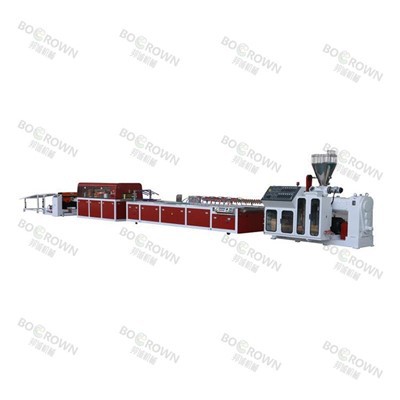
Our PE Centralized Feeding System can handle rubber compounds. The system needs to be able to handle the sticky nature of rubber. We use special coatings on the hoppers and conveyors to prevent the rubber from sticking. And it can accurately meter the rubber compounds and blend them with the plastic resin to create high – quality TPE materials.
Feeding System So, as you can see, our PE Centralized Feeding System is a pretty versatile piece of equipment. It can handle a wide range of materials, from different plastic resins to various additives, regenerated plastics, fibers, powders, and rubber compounds. If you’re in the plastic manufacturing business and are looking for a reliable feeding system that can handle all these materials, then you should definitely consider getting in touch for a chat about your procurement needs. Let’s find out how our system can make your production process more efficient and cost – effective.
References
- Tom I. Butler. Handbook of Plastic Materials and Technology. John Wiley & Sons.
- Rosato, D. V. Injection Molding Handbook. Springer.
- Ehrenstein, G. W. Polymers for Engineers: Structure and Properties. Hanser Publishers.
ZJG BC Machinery Co., Ltd.
As one of the most professional pe centralized feeding system manufacturers and suppliers in China, we’re featured by quality products and good price. Please rest assured to buy cost-efficient pe centralized feeding system for sale here from our factory. Contact us for custom service and OEM service.
Address: No.8 Lexi Road, Leyu Town, Zhangjiagang City
E-mail: sales@bcextruder.com
WebSite: https://www.bcextruder.com/
