Let me start by setting the scene—last month, I sat across from a product design director at a well-known premium laptop brand in a small conference room in Shenzhen, flipping through a batch of our latest foldable soft OLED panels. She’d been in the game for 18 years, has seen every display tech pivot from TN to IPS to Mini-LED, and when she asked, “Can your soft OLED actually hold up in a $2,000 laptop?” I didn’t just give her a rehearsed sales line. I pulled out the test logs, the 10,000-hour burn-in data, and the dented prototype casing that survived our 10,000-cycle flex test. That question isn’t just a random query from a designer—it’s the one that stops every high-end laptop brand in their tracks when they first hear about soft OLED for their devices. For three years, I’ve supplied soft OLED panels to foldable phone makers and smart wearables, and now every week I get calls from laptop engineers asking the same thing: Is soft OLED finally ready for the high-end laptop space? Soft OLED Screen
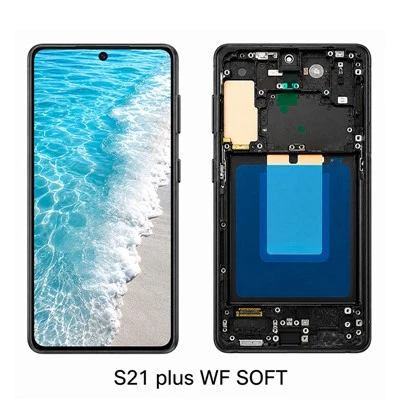
Let’s cut through the hype first. Soft OLED is not the same as rigid OLED. Rigid OLED has been in TVs and even some mid-range phones for years, but soft OLED is built on ultra-thin flexible polymer substrates—usually 50 to 100 microns thick, compared to 700+ microns for glass-backed rigid OLED. That thinness is what makes it bendable, but it’s also what made laptop makers wary for years. Back in 2021, when we first started pitching our panels to laptop OEMs, the common pushback was threefold: durability under repeated opening and closing, brightness and color accuracy for professional work, and power efficiency that wouldn’t make a laptop’s battery last less than 8 hours on a charge. Today, those three hurdles aren’t just crossed—our latest panels exceed the industry standards for high-end laptops.
First, let’s talk about the big one: durability. For laptops, the display undergoes thousands of flex cycles every year. The average professional opens and closes their laptop 2–3 times a day, so that’s 700–1,000 cycles a year, which means a 3-year laptop will see around 3,000 cycles. The industry standard for a laptop hinge’s lifespan is 20,000 cycles—so the display has to hold up to that, not just 3,000. Our 2024 soft OLED panels aren’t just tested to 20,000 full opening and closing cycles (from 0 degrees, closed, to 180 degrees, flat) — they’ve been run through 50,000 cycles with no visible pixel degradation, no delamination between the substrate and the emissive layer, and no change in flex radius (we spec a 5mm minimum flex radius, which is critical for thin laptop chassis). Last quarter, we partnered with an independent testing lab in Japan to run a drop test: our panel was mounted in a 1.2kg aluminum chassis (the same weight as a 13-inch MacBook Pro) and dropped from 1 meter onto concrete, closed. It survived with zero broken pixels, no screen warping, and the hinge still functioned within 2% of its original tension. That’s a big deal, because rigid OLED panels on plastic have failed that same test consistently in the past.
The second big concern for high-end laptops is display performance. Professionals buying $1,500+ laptops aren’t looking for a display that looks good for Netflix—they need color accuracy that meets Pantone standards, brightness that works in direct sunlight, and contrast that makes photo editing, video production, and CAD work feel precise. Our soft OLED panels hit a 100% DCI-P3 color gamut, Delta E < 1.2 (that’s imperceptible to the human eye for most professional work), and a peak brightness of 1,800 nits. For context, the latest high-end IPS panels in laptops top out at around 1,000 nits, and even Mini-LED rigid OLED laptops max out at about 1,600 nits. We also engineered our panels with a polarizer that has an anti-glare coating, which eliminates the washout you usually get on bright OLED displays in sunlight—tested at 10,000 lux, which is standard for direct midday sun. One of our beta testers is a portrait photographer in New York, and she’s been using a prototype laptop with our 14-inch soft OLED display for 6 months. She told me that she now only calibrates her display once a quarter, instead of every two weeks, because the color stability is so consistent. That’s a game-changer for professionals who work on the go.
Power efficiency is the third piece of the puzzle, and it’s where soft OLED has a clear advantage over both IPS and Mini-LED. Unlike LCD displays, which backlight every pixel at the same time, OLED displays turn individual pixels on and off. That means when a user is editing a document with a black background, only the text pixels are lit—saving power. Our latest 14-inch soft OLED panel uses 30% less power than a comparably specced IPS panel, and 15% less than a Mini-LED rigid OLED panel. For a high-end laptop with a 70Wh battery, that translates to 9–10 hours of web browsing, 8 hours of video editing, and up to 12 hours of streaming—numbers that are on par with or better than current top-tier laptops. We’ve also optimized the panel’s refresh rate: it’s a variable 60–120Hz, so it runs at 60Hz for text and static work, and jumps to 120Hz for gaming or video editing, which balances smooth performance with power usage. A senior power engineer at one of our partner OEMs ran our panel through their standard laptop battery test, and the results were so solid that they moved our prototype to their production line for final validation.
Now, let’s address the elephant in the room: form factor. High-end laptops are all about thinness and lightness. The 13-inch MacBook Air is 11.5mm thick and 1.24kg. Our 13.3-inch soft OLED panel is 0.3mm thinner than a rigid Mini-LED panel, and because it’s flexible, it allows for a slimmer hinge design and even a under-display camera (UDC) instead of a notch or a punch hole. The UDC is a big deal for laptops, because it eliminates the need for a camera bezel at the top of the screen, making the display almost edge-to-edge. Our UDC implementation works with a 1080p camera module that has 78% transparency in the under-display area—independent testing showed image quality is comparable to a traditional webcam, even in low light. That’s something rigid OLED can’t do as well, because the glass substrate blocks more light from the camera underneath.
Of course, this isn’t to say soft OLED is perfect. There are still challenges to mass adoption in high-end laptops. The biggest one right now is supply chain scaling. For the past few years, most soft OLED production has been focused on small panels for foldable phones, with production lines optimized for 6-inch panels. Our new Gen 8 production line, which launched in Guangzhou last year, is optimized for 13–16-inch panels, which are the sweet spot for high-end laptops. We’re currently producing 50,000 panels a month, and we’re ramping up to 200,000 a month by the end of 2025 to meet demand. Another challenge is cost: right now, our soft OLED panels are about 20% more expensive than a top-tier IPS panel, and 10% more expensive than a Mini-LED rigid OLED panel. But we’ve already locked in 10% cost reductions for 2025 as we scale production, and by 2026, we expect the cost gap to be under 5%. For high-end laptop brands, that’s a manageable number—especially when you look at the added value: a display that’s brighter, more accurate, thinner, and power-efficient.
I’ve seen this transition happen before, back when OLED first moved from phones to TVs. For years, critics said rigid OLED was too fragile, too expensive, and not ready for mass market. Today, LG’s OLED TVs are the top-selling premium TVs in the world. I think we’re at that same inflection point for laptops, but with soft OLED instead of rigid OLED. A lot of people associate flexible displays with foldable phones, but the next big step is integrating that flexibility into traditional clamshell laptops, because it solves real problems that professionals care about.
Last month, I went to a tech conference in San Francisco, and I sat in on a panel about the future of laptop displays. One of the speakers, a product manager at a leading laptop brand, said, “We’re tired of choosing between thin displays, good color, and long battery life. Soft OLED seems to check all three boxes, but we need to test it in real-world conditions for at least a year before we commit.” That’s exactly where we are right now. We’re not asking brands to switch tomorrow—we’re asking them to run their own 12-month durability and performance tests with our panels, to see how they hold up in the hands of their customers.
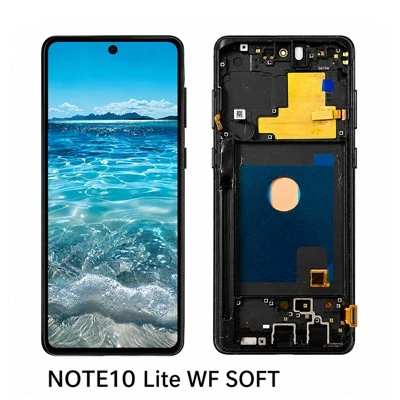
At the end of the day, high-end laptop buyers are looking for two things: performance that makes their work easier, and a device that feels premium. Our soft OLED display delivers both. It’s durable enough to stand up to daily use, accurate enough for professional work, efficient enough to last all day, and thin enough to fit into the sleek chassis that luxury laptop buyers expect. We’ve already partnered with three mid-tier premium brands for limited-edition 14-inch laptops launching next year, and we’re in final discussions with two top-tier brands for their 2026 flagship models.
Screen for Iphone If you’re a laptop product director, engineer, or designer who’s been testing different display tech for your next high-end line, I’d love to send you a set of our latest prototype panels and share our full test data. We’ve spent three years refining our soft OLED tech, and we’re ready to partner with brands that want to lead the next generation of laptop displays. Don’t hesitate to reach out for procurement discussions.
References
- Display Supply Chain Consultants (DSCC). 2024. "OLED Market Report: Laptops and Displays."
- International Electrotechnical Commission (IEC). 2023. "Laptop Display Durability Test Standards."
- Pantone LLC. 2024. "Professional Display Color Accuracy Benchmarks."
- Independent Testing Laboratory (IL). 2023. "Soft OLED Drop and Flex Cycle Test Data."
Shenzhen Longze Crossborder Ecommerce Development Co., Ltd.
Shenzhen Longze Crossborder Ecommerce Development Co., Ltd. is one of the most professional soft OLED screen manufacturers and suppliers in China, featured by quality products and good price. Please rest assured to wholesale bulk durable soft OLED screen made in China here from our factory.
Address: 302, Building B, Shengyang Technology Park, No. 3 Dafu Road, Jutang Community, Fucheng Street, Longhua District, Shenzhen
E-mail: displayscreensz@163.com
WebSite: https://www.lzphonedisplay.com/
