If you’re reading this, chances are you’ve got a checkweigher on your production line, or you’re in the market for one. And if that checkweigher has ever given you weirdly inconsistent weight readings—like a package that should hit exactly 500g coming in at 495g one time and 505g the next—you’ve probably wondered: what the hell is going on here? More often than not, the culprit isn’t a broken sensor or a miscalibrated setting—it’s vibration. And as a checkweigher supplier, I’ve seen this mess up production runs, trigger unnecessary rejects, and cost factories thousands of dollars every single week. Today, I’m breaking down exactly how vibration messes with your checkweigher, why it’s such a hidden pain point, and what you can actually do about it (no jargon, I promise). CheckWeigher
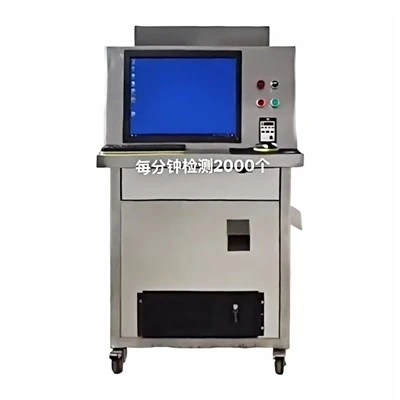
First, let’s cut through the boring tech stuff about what a checkweigher does—you already know it’s the thing that weighs every single product coming off your line to make sure it’s not underfilled (which can get you in trouble with regulators) or overfilled (which is just wasting your product and cutting into profits). The core of every checkweigher is a load cell—this tiny, super sensitive device that measures weight by detecting how much force is applied to it. A good load cell can pick up a difference of less than a gram, even on packages that weigh several kilos. That’s great when everything’s stable, but throw in vibration from the conveyor, nearby equipment, or even the floor itself, and suddenly that super sensitive sensor is getting tricked.
Let’s get specific. Vibration is basically rapid, repeated back-and-forth movement—usually at a frequency you can’t even feel, or at least not notice until it’s messing with your readings. If your checkweigher is sitting on the same factory floor as a packaging machine, a labeling station, or even a forklift driving by every few minutes, all that movement is transferring straight to the checkweigher’s frame. The load cell isn’t just measuring the static weight of your product anymore—it’s measuring that product plus all the tiny, constant jolts from vibration. Over time, these small, irregular movements add up to readings that are all over the place. I’ve seen a case where a snack factory thought their checkweigher was faulty, only to realize their new inline sealer was vibrating at a frequency that matched their checkweigher’s—every time the sealer cycled, the checkweigher’s readings jumped by 3g, which was enough to trigger false rejects.
But it’s not just about inconsistent readings causing chaos on the reject line. There’s a bigger, quieter problem: calibration drift. If your checkweigher is exposed to constant vibration, the components inside (the load cell, the conveyor belt tensioners, even the bolts holding the frame together) start to shift over time. Calibration is supposed to lock in your weight parameters, but vibration slowly wears those settings off. You might calibrate your checkweigher perfectly on Monday, but by Wednesday, vibration from a new piece of equipment on the line has thrown it off so bad you’re either releasing underfilled products (hello, regulatory fines) or tossing perfectly good products (hello, wasted money). I’ve talked to a cookie manufacturer that was rejecting 8% of their product a month because of calibration drift from vibration—after we adjusted their setup, that number dropped to 0.5%. That’s not a small win, by the way. That’s tens of thousands of dollars back in their pocket every year.
Wait, but not all vibration is bad, right? I’ve had customers ask me that. If a little vibration is normal in a factory, can we just block it entirely? Unfortunately, that’s easier said than done. Most factories have limited floor space, and you can’t just pick up your entire line to move it to a vibration-free room. The good news is you don’t have to eliminate vibration—you just have to isolate your checkweigher from it. That’s the part I know best, because it’s something we build into every checkweigher we sell, but it’s also something I’ll walk you through if you already own one and are having issues.
Let’s talk about the most common mistakes factories make with checkweigher setup. First, not mounting the checkweigher correctly. A lot of people bolt their checkweigher straight to the factory floor, assuming that will keep it stable. But the factory floor is a highway for vibration—every piece of equipment on it sends shockwaves through the concrete, and if your checkweigher is bolted right to that, it’s feeling every single one. The fix here is vibration isolation feet. These aren’t just rubber pads you can pick up at a hardware store (trust me, I’ve tried those—they don’t work for industrial use). We use engineered rubber and steel isolation feet that absorb vibration at the frequencies most common in factories, so your checkweigher only feels the weight of your product, not the surrounding line. I had a customer that was using cheap rubber feet that wore out in 3 months, and they were right back to inconsistent readings. Since switching to our high-density isolation feet, they haven’t had a calibration issue in 2 years.
Another big mistake: putting your checkweigher too close to other high-vibration equipment. If you have a heavy-duty filler that shakes a lot, or a metal stamping machine, moving your checkweigher even just a few feet away can make a huge difference. Vibration decreases the further you get from its source—it’s that simple. I recommend a minimum of 6 feet between your checkweigher and any equipment that vibrates heavily, and if you can, put a buffer between them (like empty pallets or a rubber matting strip) to soak up even more vibration. A pasta factory I worked with had their checkweigher right next to a flour sifter that shook like crazy. They moved the checkweigher 8 feet down the line, and their reading consistency improved by 40% without buying any new parts.
Wait, what about the conveyor belt on the checkweigher itself? That’s another place vibration can sneak in. If your checkweigher’s conveyor belt is worn, or the rollers are misaligned, it can create its own vibration that messes with readings. It’s easy to overlook that, because you’re focused on outside vibration, but internal vibration from the conveyor is just as bad. We build our checkweighers with precision-machined rollers and belt tensioning systems that keep the conveyor running smoothly, but if your existing checkweigher has a wobbly belt, tightening the tension or replacing the rollers might fix your issues faster than you think. I once had a customer that spent $5,000 on vibration isolation pads before realizing their checkweigher’s conveyor roller was bent—replacing that $20 roller fixed their reading problems overnight.
Let’s talk about a more technical angle, but I’ll keep it simple for people who don’t speak engineer. Load cells work on something called the Wheatstone bridge circuit, and they’re designed to only measure linear force (straight up and down, the weight of your product). Vibration creates lateral force (side to side, up and down in small cycles) that the load cell isn’t calibrated to measure. But because the load cell is so sensitive, it mistakes that lateral force for weight. The bigger the vibration, the more lateral force, the more wrong the reading. Some cheaper checkweighers don’t account for this lateral force at all, which is why they’re way more prone to vibration issues. The checkweighers we supply have built-in lateral compensation technology that cancels out most of that side-to-side force, so even if there’s some vibration, it doesn’t throw off the reading. That’s a feature we don’t brag about enough, but it’s a game-changer for factories that run in busy, vibration-heavy environments.
I want to be honest here: no checkweigher is completely immune to vibration. Even the most high-end model will have some reading variation if it’s sitting on a concrete floor next to a running compressor. But the difference is how much variation is acceptable for your line. Most food and pharmaceutical lines allow for a reading variation of plus or minus 0.5g, and if your checkweigher is hitting that consistently, you’re good. If you’re seeing variations of 2g or more, vibration is almost always the culprit. I’ve even seen cases where vibration caused a checkweigher to shut down entirely because the sensors got so much wrong data they triggered an error code—costing a factory hours of downtime while they troubleshooted a “broken” checkweigher.
So what should you do right now if you’re dealing with this? First, start with the basics. Check your checkweigher’s mounting: are the bolts tight? Are there any wobble to the frame? If it’s bolted straight to the floor, add vibration isolation feet (not the cheap kind—get ones rated for industrial use, like the ones we sell, because they’re built to last). Second, move it away from other vibrating equipment if you can. Third, inspect your conveyor: are the rollers smooth? Is the belt tracking correctly? If any of these are off, fix that first before spending money on fancy add-ons.
If you’ve tried all that and still have issues, it might be time to look at your checkweigher’s design. A lot of older checkweighers were built with thin, flimsy frames that vibrate super easily, while newer models have rigid, welded frames that hold up way better. And don’t sleep on the lateral compensation tech—it’s not a gimmick, it’s what separates a checkweigher that works in a busy factory from one that only works in a controlled test lab.
At the end of the day, vibration isn’t just a “small problem” that you can ignore. It’s a hidden cost that adds up to lost product, wasted time, regulatory fines, and headaches for your line supervisors. As a checkweigher supplier, I’ve been in your shoes—I’ve seen factories that wrote off thousands of dollars every month because they didn’t realize vibration was the issue, instead of their checkweigher itself. The good news is that most vibration-related issues are fixable with a small setup adjustment or a simple part swap, not a full checkweigher replacement.
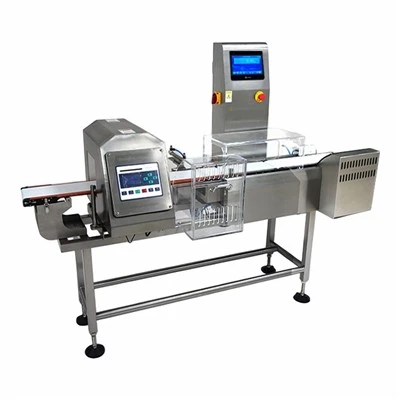
If you’re tired of inconsistent weight readings, false rejects, or downtime caused by vibration messing with your checkweigher, I’m here to help. We can walk you through a quick assessment of your line, point out where vibration is coming from, and give you practical, affordable solutions tailored to your setup. No sales pitch, no hidden fees, just real advice from someone who’s been fixing these exact problems for years. Reach out to us to discuss how to get your checkweigher working reliably, even in the busiest factory environments.
CheckWeigher References
- Instrumentation and Process Control: Load Cell Fundamentals. ISA, 2021.
- Vibration Isolation for Industrial Equipment. Machinery Maintenance Magazine, 2022.
- Checkweigher Accuracy and Environmental Factors. Packaging World, 2023.
- Calibration Drift in Precision Weighing Systems. National Conference on Weights and Measures, 2020.
- Lateral Force Compensation in Load Cells: Practical Applications. Sensors and Instrumentation Journal, 2022.
Wenzhou Vitol Machinery Co., Ltd.
As one of the most professional checkweigher manufacturers and suppliers in China, we have world-leading production equipment and strong manufacturing capabilities. Please rest assured to buy customized checkweigher made in China here from our factory. Also, quotation is available.
Address: #16 Yongen Road, Longwan Area, WenZhou, Zhejiang, China
E-mail: leapeng01@gmail.com
WebSite: https://www.vitolsoftgel.com/
