Hey everyone, if you’re in the manufacturing or industrial space, chances are you’ve dealt with welding nuts before—they’re basically the unsung heroes of joining metal parts fast, right? But here’s a question we get all the time from folks working in sectors like automotive, aerospace, or heavy machinery: “Can welding nuts actually hold up in high-temp environments?” As a welding nut supplier that’s been around the block (and test-tons of these little guys), I’ve got the real, no-BS answers you need, not just some textbook jargon. Let’s break this down, keep it relatable, and skip the fancy fluff. Welding Nut
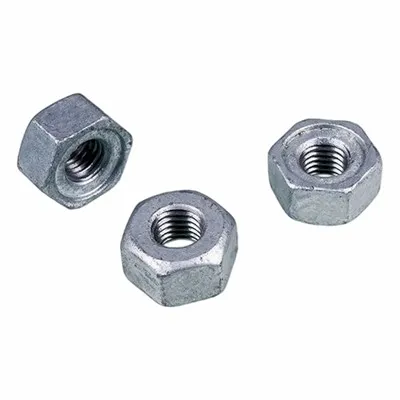
First off, let’s get one thing straight: “high-temperature” isn’t a one-size-fits-all term. For one factory, 200°F might be a hot day on the shop floor, but for a aerospace engine component? We’re talking 1,500°F+ total. So when someone asks if welding nuts work in heat, the first question I shoot back is “what kind of heat, and what’s your application?” That’s the starting line, no exceptions.
Now, let’s talk about how welding nuts are made—because their material is everything when it comes to heat resistance. Most standard welding nuts are low-carbon steel, which is cheap, easy to weld, and works great for regular indoor jobs. But low-carbon steel starts to soften around 400°F, and by 800°F, it’s not holding its shape or torque worth a damn. I’ve seen first-hand a mechanic grab a standard weld nut for a exhaust manifold job, install it, and two weeks later it’s stripped because the manifold hit 600°F+ and the nut just couldn’t keep up. That’s the mistake people make: grabbing the first weld nut off the shelf without checking the material for their temp needs.
But here’s the good news: not all welding nuts are created equal. We supply a range of specialized variants designed exactly for high-heat spots. Let’s run through the key materials we use and what temps they handle. First, stainless steel welding nuts—specifically grades like 304 and 316. 304 handles up to about 1,500°F for short periods, and 316 pushes that to 1,650°F. These are the go-tos for things like exhaust systems, industrial ovens, or even some aerospace ductwork. Then there’s heat-treated carbon steel—wait, no, not standard heat treat, we use specific grades like 4140 that’s tempered to resist softening. That one holds up to 1,200°F consistently, which is perfect for heavy machinery parts that run hot but not quite as extreme as jet engine bits. And for the really wild stuff, we have Inconel welding nuts—these are the big boys, handling up to 2,000°F+ with zero warping or strength loss. I’ve seen Inconel weld nuts survive a test in a jet engine test cell without budging, so that’s the real deal for high-temp critical applications.
Wait, but it’s not just the material—there’s the welding process itself, and how that affects the nut’s performance in heat. Let me explain: when you spot-weld a nut to a metal surface, the welding arc heats up the nut and the base metal really fast. If you do it wrong, the heat can mess with the nut’s material structure right at the weld joint. For example, if you use too high a current with a standard 304 nut, the weld zone might get burnt, making that spot weaker than the rest. At high temps, that weak spot is the first to fail. That’s why at our shop, we don’t just sell the nuts—we give clients quick, free tips on welding parameters for their specific base metal and temp range. Like, for stainless nuts on steel, we recommend 10-15% less current than you’d use for a regular bolt, to keep the nut’s strength intact. I’ve had clients come back saying that little tweak cut their weld nut failure rate by 80% on their high-temp lines—small move, huge impact.
Now, let’s talk about real-world use cases because this stuff matters when you’re on a job. Let’s take automotive exhaust manifolds, for example. The exhaust gases there are constantly hitting 800-1,200°F, and the manifold vibrates like crazy. If you use a standard low-carbon weld nut here? You’re looking at stripped threads or the nut pulling right off in 6 months. But swap in 316 stainless weld nuts, follow the right weld settings, and we’ve got clients who’ve run those same manifolds for 3+ years with zero issues. Another example: industrial furnace parts. The inner walls of a furnace get up to 1,800°F, and the weld nuts holding the insulation panels on have to not just handle that heat, but also hold the weight of the insulation. Inconel weld nuts are non-negotiable here—we supplied a steel mill last year with 2,000 Inconel nuts for their new furnace, and they’ve had zero failures in the 18 months since installation. That’s proof right there.
But wait, there are limits—even the best welding nuts can’t handle everything. If you’re looking at sustained temps over 2,200°F, we usually tell clients to look at other fastening solutions, like studs with ceramic coatings, not weld nuts. Why? Because even Inconel starts to oxidize and lose strength above that, and weld nuts, unlike studs, don’t have a long shank to distribute heat evenly. Also, if your application is in a super corrosive high-temp environment—think chemical processing plants where heat + corrosive gases mix—316 stainless is still your best bet, but you have to make sure you’re picking the right grade, not a cheap 200-series stainless that’ll rust way faster. I’ve seen that mistake too: a chemical plant used 200-series weld nuts, which corroded through in 3 months even at 500°F, so they switched to 316 and that’s been good for 2 years now.
Another thing people overlook: thermal expansion. Metals expand when they get hot, and if the weld nut and the base metal expand at different rates, that can create stress on the nut. For example, if you weld a steel nut to an aluminum base metal, at high temps the aluminum expands way more than the steel, pulling the nut loose. So when you’re picking a weld nut for a high-temp job, you have to match the nut’s material to the base metal’s thermal expansion rate. That’s a quick check we run with every client: “what’s your base metal?” and “what’s the max temp?”—we use that to narrow down the nut so expansion stress doesn’t become an issue.
Let’s address a common myth here: some folks think welding nuts are only for low-heat jobs, so they never consider them for high-temp. No way—we’ve been supplying high-temp weld nuts for over a decade, and the demand has only gone up as more industries move to higher efficiency, which means higher operating temps. The key is not skipping the research, or the questions you ask your supplier. A lot of “no-name” weld nut suppliers will just sell you a generic product and take your money, but we’re the kind that will tell you if a certain nut isn’t right for your job, even if that means you go with a different solution for a part of it. That’s why our repeat clients trust us—we’re not here to push the most expensive option, we’re here to get the right one that works for their application.
So, to circle back to the original question: Can welding nuts be used in high-temperature environments? The answer is a resounding yes—but only if you pick the right material, get the welding process right, and match it to your specific temp and application. Standard weld nuts? No, they’ll fail fast in anything above 500°F. But specialized stainless, heat-treated carbon, or Inconel weld nuts? They’re designed exactly for those hot, demanding jobs.
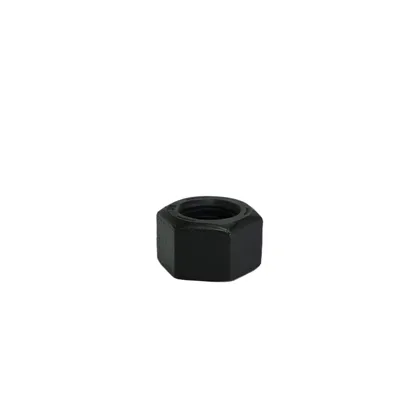
If you’re working on a project where you’re not sure—whether it’s a new exhaust line, a furnace upgrade, heavy machinery parts, or anything else that gets hot—hit us up to talk through your needs. We’ll give you straight, no-fluff advice, no hard sells, just what will work best for you. Don’t let a bad weld nut turn a great project into a costly repair.
Welding Nut References:
- ASM International. (2007). Materials Properties Handbook: Stainless Steels. ASM International.
- ASTM A193/A193M. (2021). Standard Specification for Alloy-Steel and Stainless Steel Bolting for High-Temperature Service. ASTM International.
- Inconel Alloys Technical Data. (2022). Special Metals Corporation.
- Automotive Engineering Exhaust System Design Guide. (2020). Society of Automotive Engineers (SAE International).
- Welding Parameters for Spot-Welding Stainless Steel. (2019). American Welding Society (AWS).
Jiaxing Jinling Hardware Technolgy Joint Stock Co., Ltd.
As one of the most experienced welding nut manufacturers and suppliers in China, we also support customized service. Please feel free to buy bulk high-grade welding nut made in China here from our factory. For quotation and price list, contact us now.
Address: No.32, Shenjiadai, Xuyouche Village, Qinshan Subdistrict, Haiyan County, Zhejiang Province, China
E-mail: jlzxl@jinlingfstn.com
WebSite: https://www.china-nut-factory.com/
