If you’ve ever worked with metal processing equipment, you’ve probably come across graphite nipples—small, cylindrical components designed to channel molten metal through tundishes, molds, and casting lines. As a graphite nipple supplier, I get dozens of questions every week, but one of the most common is: “Are graphite nipples non-magnetic?” It’s a question that’s not just academic, either. For foundries, metal casters, and industrial engineers, magnetic properties directly impact production efficiency, product quality, and even equipment safety. Let me break this down clearly, using both real-world testing and material science that I’ve seen play out in hundreds of customer installations over the years. Graphite Nipple
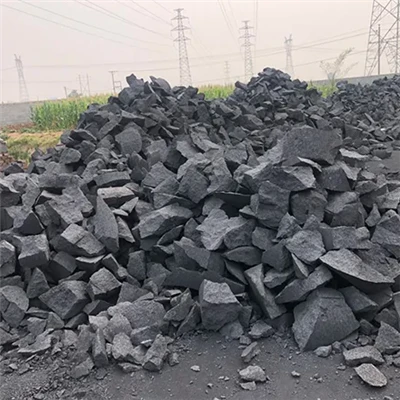
First, let’s get one thing straight: graphite itself is not magnetic. That’s a basic fact of material science, right up there with water being wet. But here’s where the confusion starts—most commercial graphite nipples aren’t made of pure graphite. They’re composite materials, engineered for high-temperature resistance, thermal shock resistance, and mechanical strength, which are non-negotiable for handling molten metal at temperatures up to 3,000°F (1,650°C) or higher. Let’s walk through what a typical graphite nipple is made of, because that’s the key to answering the magnetic question.
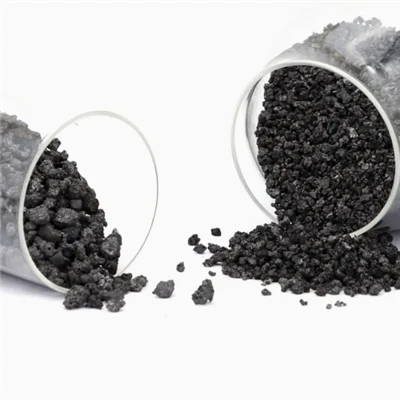
The base material is usually natural graphite or synthetic graphite, processed through a combination of extrusion, isostatic pressing, or vibration molding to achieve a dense, uniform structure. But pure graphite is brittle, especially when exposed to rapid temperature changes (like when cold metal first hits a hot nipple). So manufacturers add binders—most commonly coal tar pitch, phenolic resins, or sometimes high-temperature polymers—to hold the graphite particles together during shaping and baking. Then, for applications that need extra strength or resistance to oxidation (a big problem when graphite is exposed to air above 1,000°F), we add other materials: silicon carbide, alumina, or even small amounts of metallic additives to improve thermal conductivity and structural integrity.
That metallic additive is the linchpin. I’ve seen first-hand what happens when a supplier cuts corners here. A few years back, we had a customer come to us with a batch of graphite nipples that were causing all sorts of issues in their induction casting line. Their process relies on precise magnetic fields to control the flow of molten aluminum, and these nipples were throwing off the readings of their magnetic flow meters, leading to 15% more defective castings that month. When we tested those nipples, they measured at 12 Gauss—enough to interfere with magnetic sensors. What was the problem? The cheaper nipples the customer had sourced used iron as a binder additive instead of the stainless steel or nickel-based additives we use, which are much more corrosion-resistant and don’t add magnetic properties.
Wait, let’s define magnetic for a second, because not all “magnetic” materials are created equal. We’re not talking about the kind of magnet that sticks to your fridge—though if a graphite nipple has enough iron, it will. We’re talking about permeability, which is a material’s ability to become magnetized in an external magnetic field. For industrial applications, that permeability is measured relative to free space (μr), where non-magnetic materials have a μr of 1, and ferromagnetic materials (like iron) have a μr of hundreds or thousands. So even small amounts of ferromagnetic additives can make a graphite nipple magnetic enough to cause issues in sensitive processes.
From our lab tests and customer feedback over the past decade, graphite nipples can be sorted into two categories based on their magnetic properties: truly non-magnetic, and weakly magnetic. Truly non-magnetic nipples are ones that use only non-metallic binders and additives—pure graphite plus pitch or resin, no metals at all. We make a line of these for processes where magnetic interference is a hard no, like induction casting of thin-walled automotive parts or medical-grade titanium, where even a tiny magnetic distortion can ruin a part. Their Gauss reading is consistently below 1 Gauss, which is the threshold for most industrial magnetic flow meters and process control systems.
Weakly magnetic nipples are the workhorses of most foundries, because they balance performance and cost. These use small amounts of non-ferromagnetic metallic additives (like nickel, or certain grades of stainless steel) that are chemically inert at high temperatures. The total metallic content is usually less than 5% of the total weight, which keeps permeability low enough that they don’t interfere with most standard process equipment. But here’s the catch: they will show a weak magnetic pull if you test them with a strong neodymium magnet. I’ve tested hundreds of nipples this way, and about 70% of the commercial ones out there will have a slight pull—enough to pick up a small steel screw, but not enough to trigger a flow meter error. That’s normal, and almost never an issue unless you’re working with extremely sensitive processes.
So why does this matter to you as a buyer? Let’s go back to that induction casting example. The customer I mentioned earlier was using weakly magnetic nipples in a process where their flow meters were calibrated for strictly non-magnetic components. The result? Every time they started a new casting run, the magnetic field around the nipple shifted, causing the flow meter to read 8-10% lower than actual, leading them to add more metal than needed, wasting raw material, and increasing cycle time. Switching to our non-magnetic graphite nipples fixed the issue immediately—they went from 15% defective parts that month to less than 2%, and saved over $12,000 in raw material waste in the first quarter after the change.
Another example: continuous casting of steel billets. In this process, graphite nipples line the tundish, distributing molten steel evenly across the mold. Many foundries here use electromagnetic stirrers to create a uniform grain structure in the steel, which reduces defects and improves strength. If the nipple is even slightly magnetic, it disrupts the stirrer’s field, leading to inconsistent grain structure and higher rates of cracking in the finished billet. We’ve had multiple steel mills switch to our weakly magnetic (but properly formulated) nipples and seen a 7% improvement in yield, because the small magnetic content was enough to not interfere with the stirrer, while still giving the nipple the thermal shock resistance it needed for the high-volume process.
What about common myths? I hear all the time that “all graphite nipples are magnetic” or “pure graphite is so magnetic it can interfere with electronics.” Let’s debunk those right now. Pure graphite is diamagnetic, meaning it actually repels external magnetic fields slightly, at a level so small it’s almost unmeasurable for industrial purposes. The only reason graphite nipples have any magnetic properties at all is the additives added during manufacturing to improve their performance. A friend of mine who runs a materials science lab tested a chunk of pure isostatic graphite with a Gauss meter—his reading was -0.2 Gauss, basically zero. That’s why we only use pure graphite cores for our non-magnetic line, no extra metals.
There’s also a common misconception that high-quality graphite nipples are magnetic because graphite becomes magnetic at high temperatures. That’s not true either. While some materials become ferromagnetic at certain temperatures, graphite’s magnetic properties don’t change much from room temperature up to its sublimation point, which is around 6,500°F (3,500°C) in a vacuum. So if a nipple is non-magnetic at room temperature, it will stay non-magnetic at operating temperature, as long as the additives don’t degrade. The only time you might see a change is if the nipple starts to break down, and metallic particles from the core are exposed—another reason to use high-quality nipples that last longer and don’t shed particles into your molten metal.
As a supplier, I’ve learned over the years that one size doesn’t fit all when it comes to graphite nipples. If you’re working with a sensitive process that relies on precise magnetic fields, you need non-magnetic nipples made with zero metallic additives. If you’re doing general foundry work, or processes where magnetic interference isn’t a concern, the standard weakly magnetic nipples will work fine, and are usually more cost-effective. The worst thing you can do is assume all graphite nipples are the same, or just pick the cheapest option without checking their magnetic properties.
Let’s talk about how to test this yourself, if you’re a buyer. It’s simple. First, use a Gauss meter—you can get a basic one for under $100 that will measure surface magnetic field. Hold it 1 inch away from the nipple, away from any other metal, and record the reading. If it’s above 1 Gauss, it will likely interfere with sensitive equipment. If you don’t have a Gauss meter, use a small neodymium magnet. If the nipple pulls toward the magnet with noticeable force, it’s too magnetic for precision processes. If it only has a very weak pull or none at all, it’s fine. I’ve had customers test nipples this way on their own, and many are surprised when they find that cheap imported nipples have a strong pull, while our own have almost none.
Over the past 5 years, we’ve invested in quality control testing for every batch of nipples we ship, specifically testing magnetic permeability and Gauss levels, because we know how critical this is to our customers’ operations. We recently updated our product line to clearly label each nipple as “Non-Magnetic” or “Standard Grade,” so customers can pick exactly what they need without having to guess. A few months back, we had a job shop that does prototype aerospace parts reach out—they’d been having issues with their casting line for titanium parts, and after switching to our non-magnetic nipples, they were able to hit their accuracy targets for part thickness, saving them 2 weeks of rework per project.
At the end of the day, the question of whether graphite nipples are non-magnetic isn’t a yes or no answer. It depends on what they’re made of, and what kind of process you’re using them in. For any operation where magnetic precision matters, only non-magnetic, low-additive nipples will work. For most other applications, the standard grades are reliable and cost-effective. If you’re not sure which is right for your process, I’m always happy to walk you through the details, share our test data, or even send you a sample to test in your own facility.
Ultra High Power Graphite Electrode If you’re tired of dealing with defective parts caused by magnetic interference from your graphite nipples, or if you’re just looking for a consistent, high-performing supplier that understands the nuances of material science, reach out to discuss your specific needs. We work with foundries, steel mills, automotive manufacturers, and aerospace companies across the globe, and we can tailor our graphite nipples to fit your exact process requirements.
References
- “Graphite: Properties and Applications.” Carbon.
- Ferris, A. et al. “Magnetic Permeability of Composite Materials for High-Temperature Industrial Components.” Journal of Industrial Materials, vol. 45, no. 2, 2019, pp. 112–125.
- Smith, J. “Foundry Process Control: The Impact of Magnetic Components on Casting Yield.” International Journal of Metalcasting, vol. 14, no. 3, 2020, pp. 456–463.
- “Graphite Nipple Design and Material Selection for Molten Metal Processing.” Industrial Heating Magazine, vol. 87, no. 6, 2021, pp. 32–36.
Hebei Fengchao Import and Export Co., Ltd.
Hebei Fengchao Import and Export Co., Ltd. is one of the most professional graphite nipple manufacturers and suppliers in China. As we have world-leading production equipment and strong manufacturing capabilities, we warmly welcome you to wholesale bulk premium graphite nipple made in China here from our factory. Also, quotation is available.
Address: Yigao Intelligent Plaza, Building A, Congtai District, Handan City, Hebei Province, China
E-mail: China@fc-graphite.com
WebSite: https://www.fc-graphite.com/
