If you’ve ever left a phone charger plugged into a wall socket even when the device isn’t connected, you’ve encountered standby power—something every charger manufacturer (including my team here, a 12V lithium charger supplier) talks about constantly. When it comes to 12V lithium chargers, standby power isn’t just a trivial technical detail; it’s a key factor that impacts energy costs, battery lifespan, and sustainability. Let’s break down what standby power for these chargers actually is, why it matters, and how we design our products to handle it effectively. 12v Lithium Charger
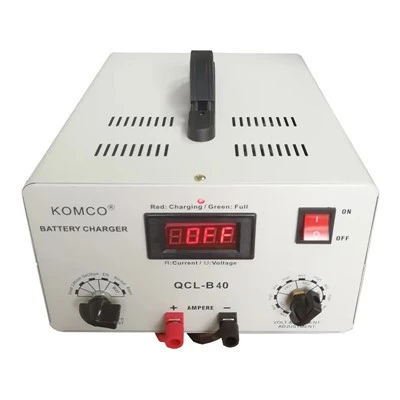
First, let’s get clear on the definition: standby power (sometimes called “vampire power” or idle power) is the small amount of electricity an electronic device consumes when it’s plugged into a power source but not actively charging a battery. For a 12V lithium charger, this is the energy it draws from the wall when there’s no battery connected to its output terminals, or when the battery it’s paired with is fully charged and the charger isn’t delivering current. A lot of customers I talk to—from RV manufacturers to off-grid solar installers to small business owners with fleet equipment—don’t realize how variable this number can be. Early 2010s vintage 12V lithium chargers, for example, could draw anywhere from 0.5 watts to 2 watts in standby. That might sound tiny, but if you leave 10 of those plugged in year-round, that’s 438 to 1752 kWh of electricity wasted annually—enough to power a small home for a month or more, depending on local energy rates.
Now, let’s get into the science of why 12V lithium chargers use standby power. Unlike older lead-acid chargers, which often stay on at a constant voltage to top off batteries continuously, 12V lithium-ion (LiFePO4, in most cases, since they’re the most common for 12V systems) chargers are designed to switch modes when the battery is full or disconnected. Most modern 12V lithium chargers have a built-in control circuit: a microprocessor, voltage regulator, and current sensor that monitor the battery’s state of charge (SOC) and adjust output accordingly. When a battery is connected and not full, the charger runs in bulk charge mode (delivering full current to get the battery up to ~80% SOC), then switches to absorption mode (lowering voltage to bring it to 100%), and finally to float mode (maintaining a low trickle charge). Once the battery hits 100% SOC and the current draw drops below a certain threshold (usually 3-5% of the charger’s rated current), many chargers will cut back to standby or even a “sleep” mode, but they still need a small amount of power to keep that control circuit running, monitor for a reconnection, and maintain safety features like overheat protection. That control circuit is where most standby power comes from.
Here’s the thing: not all 12V lithium chargers are created equal when it comes to standby power. As a supplier, we test every unit we manufacture to get precise standby power readings, and we’ve seen a huge shift in this metric over the last five years. Entry-level, no-name 12V lithium chargers often cut corners on the control circuit, using cheap components that draw more power even in standby. For example, a 10A entry model might have a standby power draw of 1.2W, while our mid-tier 10A charger is under 0.3W. That difference isn’t just about energy waste—it’s also about battery health. A charger that stays in a semi-active standby mode (instead of fully sleeping) can introduce small, frequent current pulses to the battery, even when it’s full. For 12V LiFePO4 batteries, which have a long cycle life, these tiny pulses over time can contribute to unnecessary degradation, shortening the battery’s lifespan by months or years.
I’ve had a customer reach out to me last year from a small off-grid cabin operation, where they had a bank of 12V lithium chargers powering their cabin’s auxiliary batteries. They were paying a lot more in annual electricity bills than they expected, and when we checked their setup, the standby power from their old chargers was the culprit. Those 8 chargers drew a total of 7.2W in standby, which added up to over 63 kWh per month—almost $15 a month in their area, which might not sound like much, but multiply that by 5 years, and that’s $900 wasted on power that wasn’t doing anything useful. After switching to our new low-standby 12V lithium chargers, their standby draw dropped to 2.4W total, cutting that wasted power by two-thirds. They were also noticing their batteries lasting longer, which was an added bonus they didn’t even ask for.
Another point to consider is the application for the 12V lithium charger. If you’re using a charger in a vehicle—an RV, a boat, a utility truck—that’s only used a few times a month, standby power is even more critical. Leave a high-standby charger plugged into your RV’s 12V auxiliary battery when it’s in storage for three months, and that small 1W of standby power could drain your battery completely, leaving you stranded when you want to take a trip. We design our 12V lithium chargers for automotive/RV use with a “deep sleep” standby mode that kicks in after 72 hours of no charging activity, dropping standby power to under 0.2W—so even if your RV is in storage for six months, the charger will only draw about 0.008 kWh over that period, barely touching the battery.
Now, let’s talk about how we measure standby power for our 12V lithium chargers, because there’s a lot of confusion about testing standards. When we test, we follow the International Electrotechnical Commission (IEC) 62301 standard for household electrical appliances, which specifies conditions: no load (no battery connected), ambient temperature of 25°C, and input voltage at the rated wall voltage (120V or 240V, depending on the market). We take readings over a 24-hour period and calculate the average, because some chargers have variable standby draw that changes over time as the control circuit adjusts. For our 12V lithium chargers, our typical standby power range is between 0.15W and 0.5W, depending on the model and size. Our smaller 5A chargers, used for small electronics or motorcycle batteries, have standby power around 0.18W, while our larger 50A models for off-grid solar systems are around 0.45W—their bigger control circuits need a little more power to handle higher current loads.
I know a lot of people ask, “Is low standby power always better?” And for the most part, yes—but not if it comes at the cost of safety or functionality. Some super-cheap chargers will disable safety features to cut standby power, which is a huge red flag. For example, a charger that stops monitoring for overheating in standby mode could become a fire hazard if it’s left plugged in near flammable materials. All our 12V lithium chargers maintain full safety monitoring (overvoltage, overcurrent, short circuit, overheat) even in standby, so you don’t have to sacrifice safety for energy efficiency. That’s a balance we’ve spent years perfecting as a supplier—we don’t cut corners on the control circuit’s safety components, we just optimize them to draw less power when they’re not actively charging.
Another common misconception is that standby power for 12V lithium chargers is negligible compared to the charging power. Let’s do the math on that: a 12V 30A charger has a rated charging power of 360W. Its standby power is 0.4W, which is 0.11% of the charging power. That seems tiny, but the cumulative impact adds up, especially when you have multiple chargers or long periods of idle time. For commercial customers, say a warehouse with 100 small 12V chargers for pallet jacks—each with a 0.2W standby draw—that’s 20W total, or 175 kWh per year. For a large operation, that’s thousands of dollars a year in wasted energy.
As someone who’s been in the 12V lithium charger industry for over a decade, I’ve seen how much focus has shifted from just making a charger that works to making one that works well for the customer’s entire system. Standby power is no longer an afterthought—it’s a core specification that we discuss with every potential customer, whether they’re buying one charger for a motorcycle or 50 for an off-grid solar farm. We also provide full testing data for every model we sell, so customers can verify the standby power on their own, if they want. That transparency is important to me, because I’ve seen too many suppliers fudge their numbers to make their chargers look better.
If you’re in the market for a 12V lithium charger, whether it’s for personal use or for your business, don’t overlook standby power. Ask the supplier for the standby power rating, how it was tested (look for IEC or other standardized testing), and what features they have to minimize idle power without sacrificing safety. At our company, we’re always updating our designs to bring standby power even lower—our next generation of chargers will have standby power under 0.1W for all models, while maintaining all our safety features and charging performance.
If you have questions about standby power for 12V lithium chargers, or if you’re looking to place an order for bulk supply, feel free to reach out to our team to discuss your specific needs. We work with a wide range of clients, from individual hobbyists to large-scale industrial operations, and we’re happy to provide custom solutions tailored to your application. Don’t let wasted energy or premature battery life issues hold you back—let’s find the right 12V lithium charger for your needs today.
Solar Hybrid System References
- International Electrotechnical Commission. (2020). IEC 62301: Household electrical appliances – Measurement of standby power. Geneva, Switzerland: IEC.
- lithium-ion Battery University. (2022). Charging Best Practices for LiFePO4 Batteries. Retrieved from Battery University Technical Library.
- U.S. Department of Energy. (2021). Standby Power Consumption of Consumer Electronics. Energy Efficiency & Renewable Energy Office.
- Charger Manufacturers Association. (2023). 12V Battery Charger Performance Standards and Testing Protocols. North America Region.
Huizhou Qiangfeng Power Technology Co., Ltd.
Huizhou Qiangfeng Power Technology Co., Ltd. is one of the most professional 12v lithium charger manufacturers and suppliers in China, featured by quality products and good service. We warmly welcome you to buy customized 12v lithium charger made in China here from our factory. If you have any enquiry about quotation and free sample, please feel free to email us.
Address: No. 28, Hu’ao Avenue, Shiwan Town, Boluo County, Huizhou City, Guangdong Province
E-mail: Komco@Jinlidianqi.cn
WebSite: https://www.autobatterychargers.com/
