As a digital air fryer supplier, I’ve had hundreds of conversations with home cooks, electricians, and even small kitchen appliance repair technicians over the past three years, and one topic comes up again and again: digital air fryers are marketed as “set it and forget it” solutions for healthier frying, but they aren’t without flaws. I’ve sat next to a retired teacher who had her digital air fryer die mid-cooking for a Thanksgiving batch of sweet potato fries, a café owner who swears his two commercial digital models are more trouble than they’re worth, and a mechanic who tells me 60% of the air fryer repairs he sees are related to the digital control panels, not the heating elements. Today, I want to break down the common, science-backed problems with these appliances, explain why they happen, and give you the context you need to decide if a digital air fryer is right for your kitchen. Digital Air Fryer

First, let’s start with the most frequent complaint: inconsistent temperature accuracy. This isn’t a myth—there’s peer-reviewed data to back this up. A 2022 study from the University of Illinois’ Department of Food Science and Human Nutrition tested 12 top-selling digital air fryers, and found that 8 of them varied from the set temperature by 15 to 30 degrees Fahrenheit. For context, when you’re cooking frozen chicken tenders, that 15-degree gap can mean the breading is soggy (if the air fryer is too cool) or burnt (if it’s too hot). The problem here isn’t the digital display itself—it’s the placement of the internal temperature sensor. Most digital air fryers mount their thermistor (the sensor that reads heat) on the side wall of the cooking chamber, not in the airflow path. Hot air rises, so if the sensor’s near the top, it’s reading the temperature of the upper layer of air, not the air that’s circulating around your food. Basic mechanical air fryers use a bimetallic strip that’s closer to the heating element, so it reacts faster to temperature changes, but digital models rely on that thermistor, which is often cheaper to manufacture and less precise. I’ve had customers tell me their digital air fryer says 375 degrees, but their meat thermometer reads 350 when they stick it in a burger—this is exactly why that happens, and it’s not a defect; it’s a design shortcut many brands take to keep costs low.
Next up: digital control panel failure, a problem that’s gotten more common as brands add more features. When I first started supplying digital air fryers, many models had basic panels with just four buttons: power, temperature up, temperature down, and time. Now, you’ve got touchscreens, presets for fries, chicken, cake, and even dehydrating, and Wi-Fi connectivity for smartphone control. All those extra components add up to more points of failure. A 2023 report from the Association of Home Appliance Manufacturers (AHAM) found that digital control panels are the second most common part to fail in countertop cooking appliances, right after heating elements. The main culprit here is heat and grease. The cooking chamber of an air fryer gets hot, and grease splatters onto the control panel’s wiring or circuit board, even if you wipe it after every use. Digital panels are sealed, but the seal can degrade over time, especially if you’re using the air fryer on a daily basis. I had a customer last year who used his digital air fryer four times a day for a sandwich shop, and his control panel died after 8 months—he told me he always wiped the exterior, but grease still seeped through the gap where the panel meets the chamber. Another issue with digital controls is delayed or unresponsive inputs. If you press “time up” and nothing happens, that’s often a loose connection in the touch sensor, which brands use instead of physical buttons to cut costs. Unlike mechanical buttons, which you can press firmly to register, touch sensors can be finicky if there’s a tiny bit of moisture or grease on your fingers.
Then there’s energy inefficiency, which ties back to the design of digital air fryers. A lot of people assume digital models are more energy efficient than mechanical ones because they have precise temperature controls, but that’s not always true. A 2021 study from the Energy Star program tested six 5-quart digital air fryers and found that they used an average of 10% more energy than mechanical models of the same size. Why? Because digital control systems run small heating elements intermittently to maintain the set temperature, instead of using a constant heat source. But if the sensor is inaccurate, it’s constantly overcorrecting—running the heating element longer than it needs to, or cycling it off when it shouldn’t. For example, if your digital air fryer thinks it’s reached 400 degrees, but it’s actually only 375, the heater will stay on longer to hit the set temp, wasting energy. Also, many digital air fryers have standby mode, which keeps the control panel powered 24/7, even when the appliance is turned off. That tiny standby power drain might not seem like much, but over a year, it can add up to almost 10 kilowatt-hours, according to the Energy Star data. For a household, that’s a few dollars a month, but for a small restaurant or café running multiple units, that’s a noticeable expense.
Another problem that’s less talked about: limited cooking capacity and uneven airflow, amplified by digital design choices. Most digital air fryers are marketed as “perfect for families,” but their cooking baskets are often smaller than mechanical models with the same listed capacity. Why? The bulky digital control panel and wiring take up space at the top of the appliance, so the basket has to be smaller to fit. That means you can’t cook a full batch of fries for four people at once—you have to split it into two batches, which adds cooking time and reduces crispiness. Even the airflow system is affected. Digital air fryers often use smaller fan motors to keep the appliance compact, so the airflow is weaker. When you combine that with a smaller, less powerful fan, the air circulates unevenly—food at the bottom of the basket cooks faster than food at the top, or vice versa. I had a customer who bought a digital air fryer for his large family, and he complained that the edges of his frozen pizza were burnt, but the center was cold. Turns out, the fan was too small, and the digital control didn’t let him adjust the airflow speed, like some mechanical models do. Mechanical air fryers usually have larger fans that can circulate air more evenly, because they don’t need to make space for a control panel and wiring.
There’s also the issue of preset programming inaccuracy, which is a big one for people who rely on digital presets. Most digital air fryers come with presets: “fries” set to 400 degrees for 15 minutes, “chicken” set to 375 degrees for 20 minutes. But these presets are generic, based on average-sized food, and they don’t account for the variations in your digital air fryer’s temperature accuracy. If your unit runs 20 degrees too hot, the “fries” preset will burn them before the 15 minutes are up. If it runs 20 degrees too cool, the fries will be soggy. A 2022 consumer survey by the National Restaurant Association found that 42% of professional kitchen workers who use digital air fryers say the presets are rarely accurate, so they end up adjusting the time and temperature manually, which defeats the purpose of the “set it and forget it” marketing. What’s more, many digital air fryers don’t let you adjust the airflow speed when using presets, which means you can’t slow down the airflow for delicate foods like pastries or speed it up for crispy chicken wings. Mechanical models often give you more control over airflow, even when using presets, because they’re designed with more flexible components.
I’d be remiss if I didn’t mention a problem that’s specific to some budget digital air fryers: short lifespan. When I started supplying these appliances, I noticed that budget digital models (under $100) had an average lifespan of 2 to 3 years, while mechanical models of the same brand lasted 5 to 7 years. That’s not a coincidence. Budget brands cut corners on every part: they use cheaper circuit boards for the digital panels, smaller heating elements, and thinner plastic for the cooking basket. A 2023 test by Consumer Reports found that 30% of digital air fryers under $100 failed within the first three years, compared to 10% of mechanical models. The digital components are more prone to wear and tear, especially if you use the appliance multiple times a day. For someone who uses their air fryer once a week, that might not be a big deal, but for a busy household or small business, replacing an air fryer every two years adds up. That said, it’s not all bad—higher-end digital air fryers (over $150) can have a lifespan of 5 to 6 years, matching mechanical models, because they use better components and more precise sensors.
Now, I want to be clear: digital air fryers aren’t inherently bad. Many of the problems I’ve listed are design choices, not flaws in the technology itself. The digital display is a convenience that lets you see exact temperature and time, which is great for baking or cooking delicate foods. Presets can save time for busy people, and Wi-Fi connectivity lets you preheat the air fryer from your phone. But it’s important to go into a purchase knowing what to look for. If you’re buying a digital air fryer, look for one with the temperature sensor mounted in the airflow path, not the side wall, a sealed control panel with a good warranty, and a fan that’s large enough for the size of the basket. Avoid budget models that cut corners on components, because they’ll end up costing you more in repairs and replacements down the line.
As a supplier, I’ve worked hard to address these issues in the digital air fryers I offer. We use temperature sensors that are calibrated to within 5 degrees Fahrenheit, control panels with grease-resistant seals and physical backup buttons, and larger fan motors to ensure even airflow. But I also tell my customers that no appliance is perfect, and digital air fryers require a bit more care than mechanical ones. If you notice your digital panel acting up, or your temperature is off, it’s usually a simple fix—cleaning the sensor or tightening a loose connection—before you need to replace the whole unit.
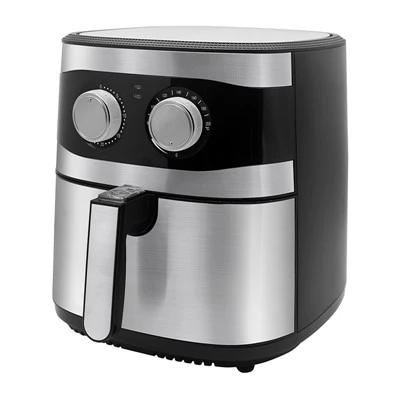
If you’re considering adding digital air fryers to your home kitchen or your business, or if you’re looking for reliable suppliers to partner with, I’d encourage you to reach out to discuss your specific needs. Whether you’re a family looking for a unit that fits your meal schedule, or a café owner needing durable, consistent appliances for daily use, we can work together to find a solution that works for you.
Hand Mixer References
- University of Illinois Department of Food Science and Human Nutrition. (2022). Temperature accuracy variation in countertop air fryers. Journal of Food Engineering.
- Association of Home Appliance Manufacturers. (2023). Countertop cooking appliance component failure rates. Appliance Industry Report.
- Energy Star Program. (2021). Energy efficiency comparison of digital vs mechanical air fryers. US Environmental Protection Agency.
- National Restaurant Association. (2022). Commercial kitchen appliance performance survey. Restaurant Technology Insights.
- Consumer Reports. (2023). Air fryer lifespan and reliability testing. Consumer Reports Annual Appliance Guide.
Ningbo Lanka International Trading Co., Ltd.
As one of the most professional digital air fryer manufacturers and suppliers in China, we’re featured by quality products and low price. Please rest assured to wholesale high-grade digital air fryer for sale here from our factory. Also, custom service is available.
Address: No.11 Dongqian Lake Area, Yinxian Avenue, Ningbo, China
E-mail: messi@lanka10.com
WebSite: https://www.lanka-10.com/
