Hey folks, if you’ve ever walked into a factory floor, a commercial building’s basement electrical room, or even a data center’s power closet, you’ve probably glanced at that big, metal cabinet with all the switches and wiring inside. Chances are, a big chunk of what’s in there is switchgear — and if you’re hearing about “withdrawable switchgear” for the first time, you’re in the right spot. As a low voltage switchgear supplier, I get asked this question all the time: what’s the deal with withdrawable switchgear, and when does someone actually need it? Low Voltage Switchgear
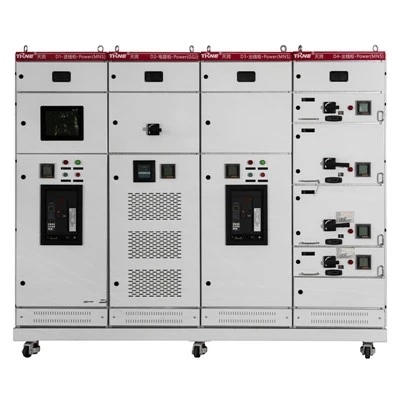
Let’s start with the basics. Low voltage (LV) switchgear is the gear that controls, protects, and isolates electrical power for everything from your office’s AC system to a manufacturing line that runs 24/7. It’s basically the guard dog for your electrical setup — stops overloads, short circuits, and keeps bad power from frying your equipment. Now, within LV switchgear, there are two main types: fixed and withdrawable. Fixed is the simpler one — the parts that switch power are bolted tight inside the cabinet; if something breaks, you have to shut the whole cabinet off to fix it, which means downtime for your whole system. That’s where withdrawable switchgear comes in, and it’s a total game-changer for people who can’t afford to be without power for even a minute.
Here’s how it works, in plain terms: withdrawable switchgear has individual units (called “breakers” or “units” for short) that slide in and out of the cabinet on little rails, like a drawer in your desk. Each unit is its own self-contained switch, with its own wiring, fuses, and protection. When you need to work on a unit, you just pull it out — no need to shut off the whole cabinet, no need to rewire everything, no waiting around for an electrician to drag tools in and tear into the cabinet. You just swap out a broken unit with a spare one, and you’re back up and running in minutes. That’s the biggest superpower here, right?
Now, let’s get into why that matters for different industries. I’ve supplied withdrawable switchgear to all kinds of clients, and the common thread is they can’t tolerate downtime. Take manufacturing, for example. A food processing plant I worked with last year had a line that made frozen pizzas — shut it down for even an hour, and all the dough in the ovens went bad, not to mention the $$$ lost in production. With fixed switchgear, a breaker failure would have meant hours of downtime, maybe even a whole shift lost. With withdrawable, they keep a spare breaker on hand, pull the faulty one out, plug the new one in, and get the line back up in 15 minutes flat. No food spoilage, no massive losses. That’s a no-brainer for them.
Then there’s commercial buildings — think a 50-story office tower, a hospital, or a shopping mall. A hospital can’t afford to have their operating rooms or ICU power go out, obviously, but even an office tower? If the elevator’s out for an hour, people are mad, and if the server room’s down, the whole company’s work stops. Withdrawable switchgear lets facilities managers do routine maintenance on their power systems without shutting the whole building down. Let’s say you need to test a breaker that powers the 10th floor’s lighting. Instead of flipping the main switch for the whole cabinet, you just pull the unit that feeds the 10th floor, test it, put it back — the rest of the building keeps running. That’s way safer, too. Working on live electrical parts is scary, but when you pull a unit out, it disconnects automatically from the main power bus inside the cabinet, so you’re working on a dead unit. Way less risk of shock or arc flash, which is a huge deal for electricians.
Data centers are another big one for us. These places have power needs that border on ridiculous — a mid-sized data center can draw thousands of kilowatts of power, and if their switchgear goes down, they’re not just losing money, they’re messing with client data, maybe even putting sensitive info at risk. I once supplied a small edge data center that serves local businesses’ cloud storage. Their team does weekly checks on all their power units, and with withdrawable switchgear, they can rotate units out for testing without any interruption to their clients. If a unit fails unexpectedly, they grab the spare, swap it, and no one even notices. Compare that to fixed switchgear, where a failure would mean the whole server bank goes dark until the cabinet’s fixed — that’s a nightmare for a data center.
Wait, but is withdrawable switchgear only for big, fancy setups? No, not exactly. I’ve worked with smaller operations, too, like a 24-hour gym that has a backup generator for their cardio equipment and sauna. They had a fixed switchgear that kept breaking every few months, and each time it went out, they had to close the sauna for the night, which lost them members. Switched them over to a small withdrawable unit, and now they keep a spare breaker in the maintenance closet. If it acts up, swap it, done. Even small businesses with critical, around-the-clock power needs can benefit.
Now, let’s clear up a common misconception: some people think withdrawable is just more expensive, and for small setups that only run 9 to 5, that’s probably true. If you’re a small retail store that closes at 10pm, and a power outage only happens once every few years, fixed switchgear is fine, cheaper, works just as well. But for anyone who relies on power nonstop, the cost of downtime way outweighs the initial cost of withdrawable switchgear. Let’s do the math: a manufacturing line making $10,000 an hour in profit, downtime is $10k an hour. If withdrawable switchgear cuts downtime from 4 hours (fixed) to 15 minutes, that’s a $7,500 savings per failure, just from one swap. That pays for the upgrade real quick.
Another thing I’ve noticed: a lot of clients come to us after having a bad experience with fixed switchgear. Last quarter, a local hospital had a main breaker fail during a routine storm prep test. They had to shut off power to half the building, including the ER, for 3 hours while they fixed the cabinet. They called us right after that, looking to upgrade their switchgear to withdrawable, and we got them set up in a week. That’s the thing — when you’ve lived through downtime that costs you clients, money, or even safety, you realize withdrawable isn’t just a nice-to-have, it’s a necessity.
Let’s talk about how withdrawable switchgear is installed, too, because that’s a big question. As a supplier, we don’t just drop it off and leave — our team works with your electricians to make sure it’s fitted correctly. Each unit is sized for your specific load, so you don’t have to overpay for a bigger breaker than you need. We also train your maintenance team on how to swap units, how to test them, what to look for when pulling them out. It’s not complicated, but it’s not something you want to mess around with on your own — electrical work is dangerous, so we make sure your team knows exactly how to handle it safely.
What about wear and tear? People ask if the sliding mechanism breaks easily, and honestly, if it’s a good quality withdrawable system, it’s built for hundreds of insertions and extractions. We use heavy-duty rails and locking mechanisms that keep the unit secure when it’s plugged in, so you don’t have to worry about it wiggling loose or causing a power drop. We test every system we supply to make sure it can handle regular swaps, because we know that’s the whole point — this gear is meant to be used, not just looked at.
Wait, are there different types of withdrawable units? Yeah, a bit. Some are for low voltage only (which is what we specialize in, under 1000V, usually), some have built-in protection relays that automatically shut off power if there’s a short or overload, which is extra safe. Some even work with smart systems now — you can monitor the status of each unit remotely, get alerts if a breaker is overheating, so you can replace it before it fails, even before you need to swap it out. That’s a newer feature, and it’s been super popular with data centers and hospitals that want to be proactive about maintenance instead of reactive.
Let me give you a real example, something I saw last year. A winery here in the region — they run fermentation tanks 24/7 during harvest season, and if those tanks lose power, the wine can spoil, which is a huge loss. They had fixed switchgear that gave them trouble two harvests in a row. We swapped in a withdrawable system, gave them two spare breakers, and last harvest, they had a minor issue with one unit. They pulled it out, swapped it, no downtime, no spoiled wine. They told me that small harvest is worth hundreds of thousands of dollars, so that upgrade was nothing compared to the risk they were taking before.
So, to wrap this up: withdrawable switchgear is for anyone who can’t afford electrical downtime. It lets you swap faulty or maintenance-needed power units without shutting off the whole system, makes electrical work safer, cuts down on repair time, and gives you peace of mind that your power won’t cut out when you need it most. It’s not for every setup — if you’ve got a small, 9-to-5 space, fixed is fine — but if you’re running something that’s critical, nonstop, or where downtime equals big losses, this is the way to go.
Now, if you’re someone who’s dealing with electrical downtime, thinking about upgrading your switchgear, or just have questions about what works for your space, we’re here to help. We’ve worked with all kinds of industries, from small businesses to big factories, and we can help you figure out exactly what you need. Shoot us a message to connect, and we can walk through your setup, answer all your questions, and get you set up with the right switchgear for your needs.
Dry Type Transformer References:
- International Electrotechnical Commission (IEC) 60439-1: Low-voltage switchgear and controlgear assemblies – Part 1: General rules
- National Electrical Manufacturers Association (NEMA) Standards for Low-Voltage Switchgear, 2022 Edition
- U.S. Occupational Safety and Health Administration (OSHA) Electrical Safety Guidelines, 2023
- “Downtime Costs: A Comprehensive Industry Analysis”, Electrical Construction & Maintenance Magazine, 2024
Zhejiang Tianrun Electric Co., Ltd.
Zhejiang Tianrun Electric Co., Ltd. is one of the most professional low voltage switchgear manufacturers and suppliers in China, featured by quality products and good price. Please feel free to buy CE approved low voltage switchgear made in China here and get quotation from our factory. We also accept customized orders.
Address: No.788 Wenyi Road, Bihu Industrial Park, Liandu District, Lishui City, Zhejiang Province, P.R. China
E-mail: luna@trne-electric.com
WebSite: https://www.trne-electric.com/
