Hey everyone, if you’re deep in the power distribution game—whether you’re a facility maintenance lead, an electrical contractor, or a spec engineer who’s spent way too many late nights troubleshooting switchgear—you’ve probably wondered this at some point: fixed vs withdrawable indoor vacuum circuit breakers. As someone who’s been in the indoor vacuum circuit breaker supply game for over a decade, I’ve answered this question more times than I can count, and honestly? There’s no one-size-fits-all “better” here. But breaking down the nitty-gritty, the real-world use cases, and even the common pain points I see clients run into will help you pick what’s actually right for your setup. Let’s dive in, no jargon overload, promise. Indoor Vacuum Circuit Breaker

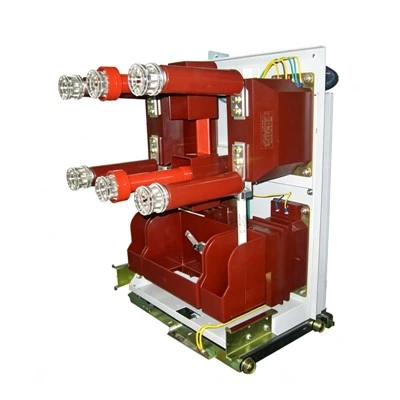
First, let’s get the basics straight so we’re all on the same page. A fixed indoor vacuum circuit breaker is exactly what it sounds like: it’s bolted permanently into its switchgear compartment, wired directly to the bus bars and load side, and you can’t pull it out without a full shutdown and a lot of manual work. No sliding, no quick disconnect—just stuck there doing its job until you need to service it. On the flip side, a withdrawable one is mounted on a set of rails, has those little disconnect jaws that click in and out, and you can roll it out of the compartment for maintenance, testing, or even a full replacement without messing with the main bus connections. That difference might sound small, but it changes everything when you’re dealing with downtime, space, and long-term costs.
Let’s start with the wins for fixed breakers, because they’re way more popular than some people realize, especially for smaller, simpler setups. First up: they’re cheaper. Like, way cheaper. I’m talking 20-30% less upfront than a comparable withdrawable model, and that’s a huge selling point for things like small commercial buildings, rural substations, or retrofit projects where budget is tight and the system isn’t super complex. If you’re powering a 50,000 sq ft office building or a small manufacturing warehouse that doesn’t have tons of redundant systems, the fixed breaker works just fine. You don’t need to swap it out every few years, and maintenance (when it does come) is a scheduled outage, not a 10-minute roll-out.
Another big plus? Fixed breakers are simpler. Fewer moving parts mean fewer things can go wrong. With a withdrawable breaker, you’ve got those disconnect jaws, the rolling mechanism, the interlocks that keep you from pulling it out when it’s energized—all that extra stuff that can wear out over time. I’ve seen clients come to me with withdrawable units where the sliding rails got clogged with dust (super common in industrial settings) and the breaker got stuck, which is a total disaster when you need to trip a fault fast. Fixed breakers don’t have that issue. They’re sealed into the compartment, less exposed to debris, and easier to keep clean if space is limited or access is tight.
But wait—fixed breakers have their own headaches, and that’s where withdrawable units shine. The biggest one is downtime. If a fixed breaker fails, you have to do a full shutdown to replace or service it. Imagine a food processing plant where the line is running 24/7—if their main breaker trips and won’t reset, they can’t just roll out a spare. They have to cut power to the entire section, yank the old breaker, wire in a new one, test it, and that could take hours. With a withdrawable breaker? You keep a spare on hand, roll the bad one out, slide the good one in, flip the interlock, and you’re back up in 15 minutes. That’s a game-changer for critical infrastructure like data centers, hospitals, or wastewater treatment plants where even an hour of downtime can cost tens of thousands (or millions) in lost revenue or safety risks.
Another pro for withdrawable breakers: flexibility. Let’s say you’re expanding your facility in a year, or you need to adjust your power load as your business grows. With a withdrawable breaker, you can easily move it to a different compartment, upgrade it to a higher amp rating, or even repurpose it for another part of the system without doing major rewiring. Fixed breakers are hardwired to their spot—moving one means cutting buses, re-terminating wires, and dealing with all that red tape. I had a client last year who was a rapidly expanding e-commerce fulfillment center; they started with a fixed breaker, but by the time they finished building the second warehouse, they needed to move that breaker to a new compartment and add another one. If they’d gone withdrawable first, it would’ve taken half the time and cost way less in labor.
Now, let’s talk about the fine print that most people miss when picking between these two. First, maintenance ease. I know, I mentioned less moving parts for fixed breakers, but here’s the catch: when you service a fixed breaker, you have to bring all the tools, disconnect all the wires, test it in a shop, bring it back, rewire, and retest. With withdrawable, you can do the basic testing (like checking vacuum integrity, contact resistance) while it’s out, no need to disconnect everything. A lot of my clients who do their own in-house maintenance swear by this—they don’t have to call in a third-party electrician every time the breaker needs a checkup; they can handle most of the work themselves.
But wait, withdrawable isn’t all perfect either. Let’s talk about cost beyond upfront. Those extra parts—rails, disconnect jaws, interlock systems—mean withdrawable breakers have higher long-term maintenance costs. The jaws can corrode, the rails can bend if you force the breaker, the interlocks can fail, and if you don’t lubricate the sliding mechanism regularly, it’ll seize up. I had a client in a paper mill a few years ago who skipped scheduled lubrication on their withdrawable breakers, and when a fault hit, one of the breakers got stuck mid-pull, so they had to do a full shutdown anyway. That’s the exact problem I warn people about—with great flexibility comes more things to maintain.
Another thing: space. Fixed breakers are way more compact. They don’t need the extra rail space or clearance around the compartment for sliding the breaker out. If you’re working with an older switchgear cabinet that’s already maxed out on space, you might not have room for a withdrawable unit. I see this a lot in retrofits of buildings that were built in the 70s and 80s—their switchgear is tight, no extra inches to spare, so a fixed breaker is the only practical option.
Let’s also get into reliability, because that’s the name of the game for circuit breakers. Both technologies are solid now—vacuum breakers, whether fixed or withdrawable, have way better arc quenching than old oil or SF6 units, so they’re more reliable overall. But I’ve seen fixed breakers last longer in harsh environments. Why? Because they’re fully enclosed, no exposed moving parts. Withdrawable breakers, even when they’re not in use, have parts sticking out that can get hit by tools, dust, or water. One of my clients in a construction zone had a withdrawable breaker where a piece of metal debris got into the disconnect jaws, and it caused a partial discharge that almost led to a full fault. Fixed breakers don’t have that risk.
So, when do you pick which one? Let’s break down real scenarios that I see every day with my clients.
Pick a fixed breaker if:
- Your system is small to medium (under 5,000 amps total, usually)
- Budget is the top priority for upfront costs
- Downtime is manageable—like office buildings, retail spaces, small warehouses that can handle a 4-hour outage for breaker service
- Space is tight, especially retrofits of old switchgear cabinets
- The environment is super harsh (dust, water, heavy vibration) where extra moving parts would cause issues
Pick a withdrawable breaker if:
- Your system is critical—data centers, hospitals, wastewater treatment, large manufacturing where downtime costs are huge
- You have room in your switchgear compartments for the sliding mechanism
- You plan to expand or reconfigure your power system in the next 5-10 years
- You want the ability to keep a spare breaker on hand for quick swaps
Wait, but what about a middle ground? I know a lot of people ask that. Is there a hybrid? No, not really—fixed vs withdrawable are pretty distinct, but some newer withdrawable models are getting more compact, so if you were worried about space, don’t write them off entirely. I’ve installed withdrawable units in cabinets that were originally meant for fixed breakers by just shaving a little off the compartment edge (with proper engineering, of course).
Another common myth I want to bust: people think withdrawable breakers are harder to install. No, actually—they come pre-mounted on rails, so installation is just sliding them in and locking them, vs fixed which needs bolting, wiring, torque testing all the connections. The tricky part is making sure the interlocks are set correctly, so you don’t have a safety hazard where someone can pull the breaker while it’s energized. But that’s a standard training point for electricians, not a big barrier.
As a supplier, I’ve seen clients make two really bad mistakes here. First, a small manufacturing plant that went with withdrawable breakers just because “they’re better” even though their budget was tight and downtime was manageable. They ended up paying 30% more upfront, and within two years, one of the sliding rails seized up and they had to call me to fix it—costing them way more than they saved by not going fixed. The second mistake was a large hospital that went with fixed breakers because they were cheaper, and when a breaker failed during a storm, they had to evacuate a wing for 6 hours while they replaced it. That’s the mistake you don’t want to make—cutting corners upfront leads to way bigger costs later.
At the end of the day, “better” is subjective. It depends on your specific setup, your budget, your downtime tolerance, and your long-term plans. There’s no shame in choosing fixed if it fits your needs, and there’s no reason to skip withdrawable if you need the flexibility. The key is to do your homework, not just go with what the sales rep tells you (or what I’m telling you, for that matter—do your own research), and weigh both upfront and long-term costs.
If you’re still stuck, or you’re working on a project and want a second opinion, feel free to reach out. I’ve helped hundreds of clients pick between fixed and withdrawable breakers, based on their exact needs, not just pushing the most expensive or most profitable unit. No pressure, no sales pitch—just honest advice from someone who’s been in this game for years, seen the good and bad choices, and wants to help you avoid the headaches. Don’t hesitate to connect for a chat about your setup.
Outdoor VCB References:
- IEEE Guide for the Application, Operation, and Maintenance of Low-Voltage Power Circuit Breakers, IEEE Std C37.100-2018
- Indoor Vacuum Circuit Breaker Technical Specifications, International Electrotechnical Commission (IEC) 62271-100
- Power Distribution Reliability Metrics for Industrial Facilities, North American Electric Reliability Corporation (NERC) 2022 Report
Juhui Power Equipment Co., Ltd.
With abundant experience, we are one of the most reliable indoor vacuum circuit breaker manufacturers and suppliers in China. Please feel free to buy bulk indoor vacuum circuit breaker made in China here from our factory. Welcome to contact us for customized service and pricelist.
Address: No. 25 Dongzhen Road, Xiangyang Industrial Zone, Yueqing City, Wenzhou City, Zhejiang Province
E-mail: JuHui99998@outlook.com
WebSite: https://www.juhuipower.com/
