If you’ve ever walked into a modern long-arm quilting studio, you’ve probably run across handmade, whimsical quilt tops stitched with custom landscape motifs, intricate floral borders, or even tiny comic book panels. For decades, that work relied on human skill: a quilter would drape layers on a frame, guide a needle by hand, and shape three-dimensional textures by varying stitch density, adjusting tension mid-seam, or tucking batting in spots to create soft, raised hills or delicate folded edges. But today, as a supplier of computerized quilting machines, I get asked a question almost daily by quilters, small business owners, and hobbyists alike: “Can these machines actually pull off 3D quilting designs, or are they stuck to flat, repetitive patterns?” Computerized Quilting Machine
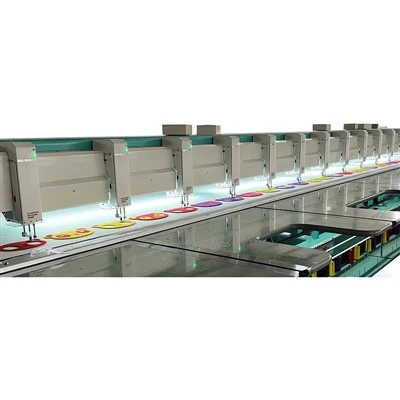
The short answer is yes, they can—but it’s not as simple as plugging a 3D file into a machine and hitting go. To understand why, let’s break down what 3D quilting actually is, how computerized quilting machines work, and the tricks we’ve developed to turn digital flat designs into tactile, raised works of art.
First, let’s define 3D quilting for anyone who’s never spent an evening folding batting and thread. Traditional “flat” quilting works by stitching three layers—top fabric, batting, backing—together in even, continuous rows or stenciled shapes. The result is a smooth, two-dimensional surface, with texture limited to minor differences in fabric weave. 3D quilting, by contrast, creates intentional variations in thickness across the quilt: think a mountain range in a landscape quilt where the peaks are puffier than the valleys, a rose petal that curves outward under your touch, or a star border that stands out from the rest of the quilt top. That texture comes down to two key elements: the amount of batting left exposed in a stitch area, and how tightly the thread is pulled to hold that batting in place. Humans do this intuitively, but machines have to be programmed to replicate it.
A computerized quilting machine—whether it’s a long-arm model for commercial studios or a smaller home version—operates on three core systems: a digital control panel, a precision head that moves along X and Y axes, and a software that translates design files into stitch commands. For years, this software was limited to 2D vector designs: it would tell the head to move to (X,Y) coordinates, sew a straight line or a curve, and repeat. That worked great for all-over patterns, straight line quilting, or even simple stenciled shapes, but it couldn’t account for the third dimension of thickness.
So how did we bridge that gap? It started with updates to the machine’s control software and the adoption of specialized design tools. The first big innovation was the integration of “stitch density mapping” into quilting software. Instead of a single 2D design, quilters can now upload a grayscale image (or a custom height map) to their machine: darker shades of gray tell the machine to sew closer together, trapping more batting under the thread to create a puffier area, while lighter shades mean wider stitch spacing, leaving thinner batting for a flatter surface. For example, if a quilter wants a quilted sunrise with soft, rounded clouds, they can make the cloud shapes darker gray than the sky. The machine’s software reads that map, adjusts stitch spacing automatically, and delivers exactly that raised, soft cloud texture.
But it’s not just density. Another key part of 3D quilting with these machines is adjustable thread tension. A lot of new computerized machines come with automated tension control, which means the software can adjust how tight the thread is at every point in the design. For raised textures, quilters often use a slightly looser top thread; that slack gives the batting room to expand upward into a gentle peak, instead of being flattened by tight thread. For sharp, defined details—like the edge of a leaf or the center of a flower—they use a tighter tension to pull the thread down flat, preventing stray batting from poking out. This combination of density mapping and tension adjustment is what turns a digital 2D design into a 3D tactile piece.
I’ve seen this in action with customers who were skeptical at first. Last year, a small quilt shop owner who’d been hand-quilting custom wedding quilts for 15 years came to us, saying her hand work was “the only way to get that soft, dimensional heart shape in the center of a bridal quilt.” She rented one of our mid-range computerized quilting machines for a test run, and spent a week testing different settings. What she ended up with was a quilt top stitched with a raised lily of the valley border, where each petal had just the right amount of puff: not so much it looked lumpy, but enough that it stood out when held. She ended up buying the machine that week, and now uses it to take on five times as many custom orders as she could before.
Of course, there are limits to what even the most advanced computerized quilting machine can do. It can’t replicate the subtle, organic variations a human quilter adds to hand work—like a slight slant in a curve, or a tiny, accidental puck that adds character. It also can’t create extreme 3D shapes, like sculpted figures or raised pockets, that would require manipulating batting mid-quilt. For those, hand work is still the best option. But for the kind of 3D quilting that makes up 90% of custom quilting orders—landscapes, floral borders, decorative motifs, heirloom pieces—these machines can match and often exceed hand work in consistency and precision.
Another thing to note: a lot of people think computerized quilting machines are only for large-scale commercial projects, but that’s not true. Our smaller home model, for example, has built-in 3D quilting presets for hobbyists who want to make throw quilts, baby blankets, or wall art. These presets take the guesswork out: you pick a design, adjust the height of the puff, and the machine handles the rest. A customer last month told me she used the machine to make a Christmas quilt with 3D reindeer and snowflakes, and said it turned out better than any hand-quilted piece she’d ever made, because every reindeer antler was the same size and puff.
Of course, to get those good results, you have to pair the machine with the right software and materials. We always recommend that customers use high-loft batting (cotton or bamboo blend works best) for 3D designs, because it’s soft enough to puff but sturdy enough to hold its shape. Low-loft batting, by contrast, will lay flat no matter how dense the stitches, so it won’t create that 3D effect. It’s also important to calibrate the machine regularly: a few small adjustments to the needle height or tension can make a big difference in how soft or defined the final texture is.
I should also address a common misconception: some people worry that 3D quilting with computerized machines will replace human creativity. If anything, it’s the opposite. Before these machines, a quilter might spend 10 hours hand-quilting a single custom design, leaving little time to experiment with new patterns or take on more work. Now, they can use the machine to handle the repetitive parts of the design, and focus on the creative decisions: choosing color palettes, adjusting the height of 3D elements, or adding unique details that make each quilt one-of-a-kind. That’s why we see so many small quilting businesses using our machines to expand their offerings, not cut corners.
Over the past five years, we’ve seen a huge jump in demand for computerized quilting machines with 3D capabilities. More and more quilters are moving from hand work to machine-assisted work, because it lets them make pieces that were once only possible with hours of labor, and reach customers who want custom, tactile quilts at a fair price. Last year, our sales of 3D-capable machines increased by 47%, and we’re constantly updating our software to make it even easier for quilters to create complex 3D designs.
If you’re still on the fence about whether these machines can deliver real 3D quilting, I’d encourage you to ask anyone who’s used one. We’ve sent demo machines to dozens of quilt studios, and almost all of them end up making the switch. I’ve seen quilters who swore they’d never use a machine for custom work fall in love with the texture and consistency they get with computerized 3D quilting.
At the end of the day, quilting is about more than just stitching three layers together—it’s about making something tactile, something that feels warm and personal. Whether you’re a hobbyist making a blanket for your grandchild, or a business owner looking to scale your custom orders, a computerized quilting machine with 3D capabilities can help you bring those designs to life in a way that’s both efficient and beautiful.
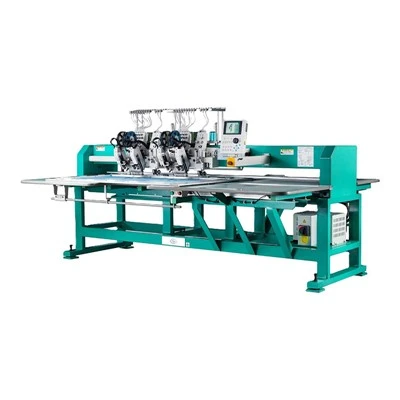
If you’re ready to learn more about how these machines work, or to test one for your own projects, we’d love to help you find the right model for your needs. We offer on-site demos, training sessions, and ongoing support to make sure you get the most out of your machine, including tips for perfecting your 3D quilting designs.
Sequence Or Cording Embroidery Machine References:
- Quilt Market, 2023 Annual Supplier Report on Computerized Quilting Technology
- International Quilt Association, 2024 Survey of Commercial Quilting Businesses
- Journal of Textile and Apparel Technology and Management, 2022 study on stitch density and 3D textile construction for quilting applications
- Consumer Quilting Trends Report, Craft & Hobby Association, 2023
Yiwu Kuhao Import and Export Co., Ltd.
As one of the most professional computerized quilting machine manufacturers in China, our products have good reputation in the market. Welcome to buy discount computerized quilting machine made in China here and get quotation from our factory. All customized products are with high quality and low price.
Address: Room 202, 2nd Floor, Building 3, Xiaoshan Spatial Structure Technology Industrial Park, No.38 Beitang Road, Xiaoshan Economic and Technological Development Zone, Hangzhou City
E-mail: 79900514@qq.com
WebSite: https://www.kuhaoembroidery.com/
