If you’ve ever shipped goods from China to Australia, especially as a business owner balancing multiple small orders into one cost-effective shipment, you’ve probably heard the term “consolidation shipping” tossed around. And if you’re like many of our clients—retailers restocking online inventory, small manufacturers sending batch components, or even entrepreneurs testing new products—one question looms large: are there specific quarantine requirements for these consolidation shipments? As a China to Australia consolidation shipping provider with years of experience navigating both countries’ customs rules, I’m here to break this down clearly, with practical insights that go beyond generic government notices. China To Australia Consolidation Shipping

First, let’s clarify what a consolidation shipment is, because the rules for these mixed-cargo loads are different from shipping a single full container. When we consolidate goods, we combine multiple small shipments from different senders in China into one unit (usually a 20ft or 40ft shared container, or sometimes a less-than-container load, LCL, pallet) to cut costs for everyone. That means a single consolidated container might have a designer’s cotton scarves, a tech company’s laptop chargers, a toy brand’s plastic figurines, and a small café’s ceramic mugs. On the Australian end, quarantine authorities call this “mixed cargo,” and they have specific checks for items that could carry pests, diseases, or contaminants.
I first learned how strict these rules can be early in my career, back when I messed up a small consolidation for a toy client. We didn’t check that one of the three shipments included 50 wooden toy cars, and Australia’s Department of Agriculture, Fisheries and Forestry (DAFF) flagged them as high-risk for wood-boring insects. The whole container was held in Melbourne port for two extra weeks, which cost our client extra storage fees and delayed their Black Friday restock. That mistake taught me that consolidation shipping isn’t just about combining packages—it’s about vetting each item before it leaves China, to avoid quarantine headaches in Australia.
So, what are the exact quarantine requirements for consolidated shipments from China to Australia? Let’s split this into two parts: rules from the Chinese side (when we prepare the shipment for export) and rules from the Australian side (when the shipment arrives).
Starting with the Australian import rules, which are the ones that most often catch people off guard. DAFF doesn’t treat consolidated shipments differently from single shipments when it comes to high-risk goods—every item in the container is assessed individually. The key here is the Australian Border Force (ABF)’s “Prohibited and Restricted Goods” list, which includes items like wood (unprocessed, solid wood packaging is different, but unprocessed wood goods are high-risk), fresh produce, seeds, soil, and even some textiles that haven’t been treated. For consolidation shipments, the big thing is that if even one item in the whole load is prohibited, the entire container could be held, or even rejected.
Wait, I should note that there’s an exception for “low-risk” items. For example, if your consolidation is made up entirely of man-made products—like plastic electronics, metal tools, or woven synthetic textiles—DAFF usually doesn’t require extra quarantine checks, as long as the items are clean and free of soil or organic contaminants. But if your load includes any natural materials, you need to have proper documentation. For wood items, that means a Phytosanitary Certificate issued by the Chinese General Administration of Customs (GAC), proving the wood has been heat-treated or fumigated to kill pests. For food products, it might require an Import Permit from DAFF before the shipment leaves China.
Now, what about the Chinese side? When we handle consolidation shipments in China, we have to comply with GAC’s export rules for quarantine. GAC requires that all goods leaving China have a health inspection certificate, but for consolidation loads, we also have to make sure that none of the items we’re combining are on China’s own “restricted export” list for quarantine-related items—like some live animals, certain plant products, or items that carry high risk of cross-border pests. I work with a network of local warehouses in Shenzhen, Guangzhou, and Shanghai that pre-screen every item before it joins a consolidation, which cuts down on issues. For example, a client once tried to add a bag of dried herbs to a consolidation shipment, and our warehouse noticed it wasn’t labeled correctly, so we had it tested by a local inspection agency before letting it go—otherwise, GAC would have held it at the port.
A common question I get from clients is: do I need to separate my high-risk items if I’m part of a consolidation? The short answer is, it depends. If your high-risk items are small, you can usually include them in the consolidation as long as you have all the right documentation. But if you have a large volume of high-risk items, it’s often cheaper to ship them as a separate full container, because LCL consolidation adds handling fees and sometimes requires extra storage while waiting for inspections. For example, I had a client who shipped a 100-pallet consolidation of kitchen tools—most were metal, but 5 pallets were wooden cutting boards. We arranged for the wooden boards to be heat-treated in a Guangzhou warehouse before adding them to the container, and we included their Phytosanitary Certificates, so the shipment cleared quarantine in Sydney in 5 days, which is way faster than the average 10 days for high-risk LCL.
Another point people miss is that consolidation shipments are often subject to random quarantine inspections by DAFF, just like full container loads. But because consolidation loads are made up of multiple small shipments, the inspection process can take a bit longer. ABF will sometimes open the entire container to check a random pallet, instead of just one small package, which adds a day or two to clearance time. That’s why we always tell our clients to build 3-5 extra days into their timeline, especially if their shipment includes any natural materials.
I should also address a common misconception: some people think that if you use a freight forwarder, they’re responsible for all quarantine checks. But that’s not the case. As a China to Australia consolidation shipping provider, we handle the logistics of combining shipments and preparing the necessary documentation, but the sender (that’s you, the business owner) is ultimately responsible for making sure your goods meet both Chinese and Australian quarantine rules. If you send a prohibited item by mistake, DAFF can fine you up to AUD 180,000, or even seize the shipment. I’ve seen that happen to a small online seller who accidentally included a bag of dried fruit in a consolidation shipment—DAFF seized the fruit, fined the seller AUD 1,000, and held the rest of the load for 10 days until they rechecked every package.
So, how can you make sure your consolidation shipment clears quarantine smoothly? Over the years, I’ve put together a few best practices that we share with every client:
First, list every item in your consolidation with full details—don’t just say “clothing.” For each item, specify if it’s natural (cotton, wool, leather) or man-made, if it’s been treated (like heat-treated wood), and if it has any organic attachments (like soil, seeds, or fabric with untreated stains). That helps our pre-screening team catch high-risk items before they leave China.
Second, get the right documentation before your shipment departs. If you’re shipping wood items, make sure you have a Phytosanitary Certificate. If you’re shipping food, flowers, or live plants, check with DAFF to get an Import Permit at least 2 weeks before your shipment is scheduled to leave China. We can help you with the paperwork, but it’s your responsibility to apply for the permit—we can’t do that for you.
Third, avoid mixing high-risk and low-risk items unless you have to. If your shipment has both wooden furniture and plastic toys, it’s often better to split them into separate consolidations, or ship the wooden items as a small full container. That reduces the chance of the whole load being flagged.
Fourth, work with a consolidation provider that has experience with quarantine rules in both China and Australia. Not all freight forwarders specialize in consolidation shipping, and many don’t have the local connections to pre-screen items or process documentation quickly. Our team is based in both Guangzhou and Sydney, so we know exactly what DAFF and GAC look for, and we can resolve issues quickly if they come up.
Wait, let me give you a real example of a smooth shipment last month. A small fashion brand in Shanghai wanted to ship 20 pallets of clothing and accessories to their online store in Melbourne. They were combining their shipment with three other small businesses: a home decor maker (woven synthetic baskets), a stationery brand (plastic notebooks), and a toy maker (plastic dinosaur figures). We pre-screened all items: the clothing was 100% synthetic polyester and cotton, with no soil or organic attachments; the baskets were synthetic wicker; the notebooks were plastic; the toys were plastic. We prepared the GAC health inspection certificate, and since none of the items were high-risk, DAFF didn’t require any extra quarantine checks. The shipment cleared Sydney port in 3 days, and our client received their goods 12 days after it left Shanghai—way ahead of their expected timeline.
Now, what happens if your shipment does get held by quarantine? In my experience, it’s almost always a small issue, like a missing label or an unlabeled natural item. For example, a client sent a batch of wooden picture frames without a Phytosanitary Certificate—DAFF held the container until we rushed a certificate from the local inspection agency in Ningbo. That only took 3 days, and no extra fees beyond the inspection cost. But if the issue is a prohibited item, like fresh fruit, DAFF will usually seize it, and you might have to pay disposal fees. So it’s better to check the prohibited list twice before sending.
To wrap this up, the quarantine requirements for consolidation shipments from China to Australia are specific, but they’re not impossible to navigate. The key is to be transparent about what you’re shipping, get all the right documents, and work with a provider that knows both countries’ rules. At the end of the day, quarantine is there to protect Australia’s environment, not to make shipping hard—if you follow the rules, your shipment will clear quickly.
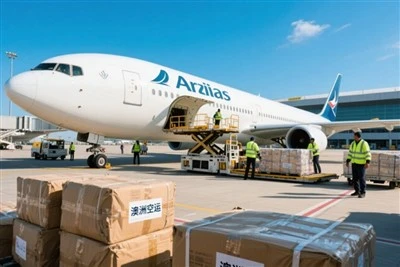
If you’re planning a consolidation shipment to Australia and want to make sure you’re compliant, don’t hesitate to reach out. We can walk you through the process, help you pre-screen your items, and answer any questions you have about documentation or timelines. Whether you’re a small business owner sending your first shipment or a larger retailer looking to cut costs on consolidated loads, we’re here to make the process smooth and stress-free. Don’t let quarantine rules hold up your next shipment—contact us today to talk through your needs and get a personalized quote.
China-Australia Sea Freight References
- Australia Department of Agriculture, Fisheries and Forestry. "Importing Goods into Australia: Prohibited and Restricted Items."
- General Administration of Customs of the People’s Republic of China. "Quarantine Requirements for Export Goods from China."
- International Air Transport Association. "Consolidation Shipping Guidelines for Cross-Border Trade."
Shenzhen Kuaihui International Logistics Co., Ltd.
Shenzhen Kuaihui International Logistics Co., Ltd. is a leading China-Australia dedicated logistics service provider in China. As a professional agent and platform, we are committed to providing high quality china to australia consolidation shipping with low price. Welcome to contact us for pricelist.
Address: 3rd Floor, Building 6, Nanbiantou Industrial Zone, Xifang, Songgang Street, Bao’an District, Shenzhen City, Guangdong Province
E-mail: info@kkhwl.com
WebSite: https://www.kuaihuiexp.com/
