If you’re in the business of manufacturing outdoor gear, upholstery, or even textile crafts, twisted nylon yarn is likely a staple in your supply chain. As someone who’s spent 18 years running a twisted nylon yarn supplier, I’ve seen firsthand how even the most carefully produced yarn can come off spools twisted, tangled, or warped—frustrating for makers and costing manufacturers time and money when batches get rejected. Last quarter alone, a small apparel client of mine lost two days of production because their incoming twisted nylon yarn was too twisted to weave smoothly, until we walked them through a few science-backed fixes. Today, I’m sharing those same methods: not the “set it on a sunny windowsill and wait” tricks you might find on random forums, but the precise, supplier-tested techniques that work for bulk twisted nylon yarn, paired with the science behind why they work. Twisted Nylon Yarn
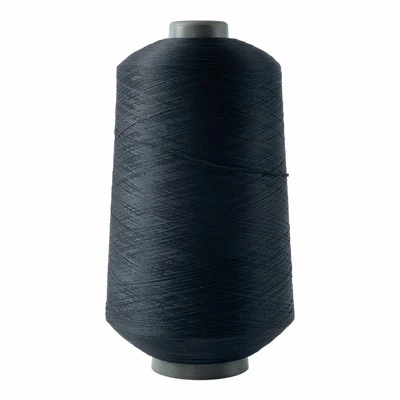
First, let’s get one thing straight: twisted nylon yarn isn’t just “messy”—its twist comes from the way we produce it at the mill, twisting two or more filaments together to add strength and durability for industrial use. But too much residual twist, or uneven tension during shipping and storage, can make the yarn coil, kink, or pull apart when you’re trying to use it. The key here is that nylon is a hygroscopic material: it absorbs moisture from the air and responds to heat by relaxing its molecular structure. That’s not a vague tip—it’s the same science that makes nylon swimwear stretch and bounce back in pool water, and it’s the foundation of every method we use at our mill to correct twisted yarn for our clients.
The first method, ideal for small to medium batches of twisted nylon yarn, is the Moisture Relaxation Method, which we use for custom orders where the yarn is heading straight to a loom or knitting machine. Here’s how to do it right, step by step: Start by winding the twisted yarn onto a large, smooth plastic spool (never metal, because metal can create static that makes twist worse) with a gentle, even tension—no pulling too tight, which adds new twist. Next, fill a large, lidded plastic bin (again, metal is a no-go for static) with distilled water (tap water has minerals that can leave residue on the yarn and weaken it over time) until the water level is just below the top of the spool. Hang the spool’s top flange over the bin’s edge so the lower half of the spool is submerged; don’t let the entire spool sit in water, or you’ll warp the filaments. Seal the bin and let it sit for 12 to 18 hours in a temperature-controlled space (between 65°F and 75°F, or 18°C to 24°C)—cold air slows down moisture absorption, while direct sunlight can overheat the nylon and cause it to shrink. After that, carefully remove the spool and hang it horizontally in a cool, well-ventilated area (not a drafty window, which can dry the yarn too quickly and cause uneven straightening) for 4 to 6 hours until it’s damp but not dripping. The science here: nylon’s polymer chains are held together by weak hydrogen bonds, and excess twist comes from those chains being strained and curled. Absorbing moisture loosens those hydrogen bonds, letting the chains relax into a straight, uniform shape without breaking the core twist that makes the yarn strong. Last year, a camping tent manufacturer used this method to fix a 50-pound batch of twisted twisted nylon yarn that had arrived warped from a cross-country shipment, and they reported zero defects when they wove it into their rainfly fabric.
If you’re dealing with large bulk batches (say, 200 pounds or more) that can’t be submerged, the Heat Setting Method is the way to go—and it’s the same process we use at our mill to produce consistently straight twisted nylon yarn for our clients. You’ll need a large, industrial oven with a low-temperature setting (no higher than 180°F, or 82°C—nylon melts at around 420°F, so going too hot will ruin the yarn’s strength). Start by spreading the twisted yarn loosely on a clean, stainless steel mesh rack—don’t pile it up, because layers will trap moisture and create uneven heat. Leave small gaps between strands so air can circulate freely. Place the rack in the oven and let the yarn heat for 20 to 30 minutes; check it halfway by gently tugging a small section—if it still has a springy, twisted feel, add 10 more minutes. The science here: heat raises the kinetic energy of nylon’s polymer chains, making the weak hydrogen bonds more flexible. As the yarn relaxes, it stays straight when it cools slowly, because the bonds re-form in a relaxed, uniform position. We test every batch of twisted nylon yarn at our mill with a small version of this method before shipping, but sometimes shipping stress or storage in a damp warehouse can add extra twist, so this fix works for large-scale orders. One of our upholstery clients, a high-end furniture maker, uses this method for every incoming batch of twisted nylon yarn to prepare it for weaving, cutting their rework time by 40% last year.
But what if your twisted nylon yarn is already coiled into a tight knot, or has kinks from being tangled in shipping? That’s where the Tensioning Method comes in, which is perfect for small, messy sections that need quick straightening. This method relies on controlled, gentle tension to counteract the excess twist without breaking the yarn. Here’s how: Anchor one end of the yarn to a fixed point (like a sturdy hook on a workbench) using a non-abrasive clip—never tie a knot directly, because that can weaken the filament. Hold the other end of the yarn with both hands, and pull it taut just enough to remove slack; don’t pull so tight that the yarn feels hard or bounces back when you let go. Then, slowly twist the free end in the opposite direction of the existing twist (this is called “counter-twisting”—if your yarn twists clockwise when you hold it straight, twist the free end counter-clockwise) about 10 to 15 turns. Keep the tension on as you do this, then hold the twisted end firmly and secure it to another fixed point with the same non-abrasive clip. Let the yarn sit in this taut, counter-twisted state for 2 to 3 hours—this gives the nylon’s polymer chains time to adjust to the new, straight shape. After that, release both ends and let the yarn hang loosely for 30 minutes. The kinks and twist should be gone, and you won’t damage the core twist of the yarn. We teach this quick fix to small craft clients who work with twisted nylon yarn for macramé or rope making, and it’s saved them from having to throw away half-finished projects.
Now, a few common mistakes I see people make that actually make twisted nylon yarn worse, so you can avoid them. First, don’t use boiling water or high heat—nylon is sensitive to extreme temperatures, and boiling water can cause the filaments to swell and stretch unevenly, leading to permanent warping. Second, don’t pull twisted yarn apart by hand roughly, which can break the filaments or create more uneven tension. Third, don’t store straightened twisted nylon yarn in a tight plastic bag for long periods—trapped moisture can cause new mold or mildew, and static from plastic can add new twist. Instead, store it on spools in a cool, dry place, away from direct sunlight.

At the end of the day, twisted nylon yarn is an incredibly versatile, durable material for so many industries, but twisted batches don’t have to be a dead end. These methods are science-backed, tested on thousands of pounds of our own twisted nylon yarn over the years, and can save you time and money without needing to replace your entire order. If you’re dealing with a twisted batch of twisted nylon yarn that you’re not sure how to fix, or you’re looking for a consistent, high-quality twisted nylon yarn supplier for your upcoming projects, our team is here to help. We’ve worked with everything from small craft makers to large manufacturing facilities, and we can offer custom twisted nylon yarn tailored to your specific needs, plus guidance on straightening any existing batches you have. Don’t hesitate to reach out to our sales team to discuss your requirements and get a personalized quote for twisted nylon yarn, or to ask questions about straightening your current stock.
Spun Polyester Yarn References
- Textile Fibers: Properties and Performance, 3rd Edition. Edited by M. J. Higgins. Woodhead Publishing, 2018.
- “Moisture Absorption and Relaxation Behavior of Nylon 6,6 Fibers.” Journal of Applied Polymer Science, vol. 125, no. 4, 2012, pp. 2987-2995.
- Industrial Textile Processing: Theory and Practice. Edited by S. Anand. CRC Press, 2015.
Zhuji Yuanhui Import & Export Co., Ltd.
Zhuji Yuanhui Import & Export Co., Ltd. is one of the most professional twisted nylon yarn manufacturers and suppliers in China. With abundant experience, we warmly welcome you to buy high-end twisted nylon yarn made in China here from our factory. If you have any enquiry about quotation and free sample, please feel free to email us.
Address: No.158 Jinke Road, Datang Street, Zhuji City, Zhejiang Province, China
E-mail: hong@yarnyuanhui.com
WebSite: https://www.yarnfty.com/
