Hey there, if you’re deep in the industrial fluid game like we are, you’ve probably heard the term “chemical pump efficiency” thrown around nonstop—like it’s the secret sauce to not wasting cash, keeping your operations on track, and not burning through parts faster than you can replace ’em. As a chemical pump supplier, we get it: efficiency isn’t just a buzzword for us, it’s how we help our clients keep their plants running smooth (and their budgets happy). But here’s the thing—most folks we talk to, whether they’re new to the industry or seasoned maintenance heads, don’t totally get what the chemical pump efficiency formula actually is. It’s not some random number plucked out of thin air, and it’s way more useful than just a line item on a spec sheet. Let’s break this down like we would over a coffee with one of our regular clients, no fancy jargon that makes your eyes glaze over. Chemical Pump
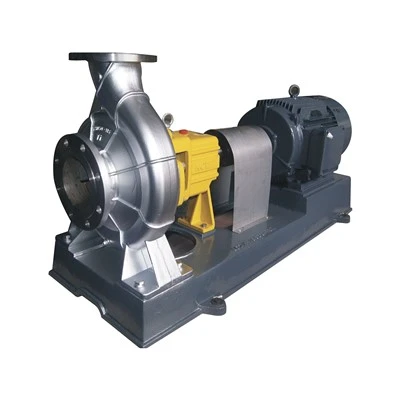
First off, let’s start with the basics: what even is pump efficiency, specifically for chemical pumps? These aren’t the sump pumps in your basement that move clean water—chemical pumps handle all kinds of messy stuff: corrosive acids, viscous solvents, abrasive slurries, anything that would wreck a standard pump. So their efficiency isn’t just about moving fluid, it’s about moving that tough stuff without wasting energy. At its core, pump efficiency is all about how much energy you put into the pump versus how much useful energy you get out of it to move the fluid. That’s the whole ballgame.
Now, the formula itself. I know, formulas can feel scary, but this one’s straightforward—we use it every single day at our shop, whether we’re testing a new model before it leaves our warehouse or troubleshooting a pump that’s acting up at a client’s plant. The main formula is: Efficiency (usually written as a percentage, so we multiply the decimal we get by 100) equals (Hydraulic Output Power divided by Shaft Input Power) times 100. Let’s call that η = (P_hyd / P_shaft) * 100, if you want the technical shorthand, but we don’t live in that world 24/7.
Wait, let’s define those two power terms so you don’t have to Google them at 2 a.m. when your pump’s acting up. Hydraulic output power—also called water horsepower, for you old heads—is the useful energy the pump delivers to the actual fluid. That’s the stuff that moves chemicals from Point A to Point B, overcomes pipe friction, pushes it up to the right height, all that good stuff. To calculate that, you need three key numbers: flow rate (how much fluid is moving, usually in gallons per minute or liters per second), total head (that’s the total pressure the pump has to work against, which includes how high you’re lifting the fluid, plus all the friction from pipes, valves, and elbows, plus any pressure at the discharge end), and the specific gravity of the fluid—super important for chemical pumps, because a 10% acid is way heavier than water, so it takes more energy to move it. The formula for hydraulic power is (Flow Rate * Total Head * Specific Gravity) divided by 3960—wait, that constant 3960? That’s just a conversion factor to get the units right (we’re using GPM, feet, and pounds per gallon here for US units, which is what most of our North American clients use). If you’re working metric, it’s a different constant, but same logic.
Then there’s shaft input power—that’s the energy going into the pump, right? That’s the power from the motor driving the pump shaft. This is the energy you pay for in your electricity bill, or fuel if it’s a diesel-driven pump. The shaft power is always higher than the hydraulic power, and that difference is the energy lost—we call those losses, and they’re why efficiency is never 100%. No pump is perfect, and chemical pumps have extra losses because of the harsh fluids they handle, plus the seals, bearings, and internal friction from the impeller and casing moving the tough stuff.
Let’s put this into a real example so it makes sense, not just numbers. Say we have a client who needs to pump 50 gallons per minute of 1.2 specific gravity caustic soda (super common in chemical processing) up 60 feet, with total head (including friction from pipes) at 75 feet. First, calculate hydraulic power: (50 * 75 * 1.2) / 3960 = (4500) / 3960 ≈ 1.136 horsepower. Now, if the pump’s shaft power is 1.5 horsepower, then efficiency is (1.136 / 1.5) * 100 ≈ 75.7%. That’s a solid efficiency for a chemical pump handling a moderately viscous, slightly corrosive fluid—makes sense, right? If that pump was only putting out 1.0 hp for 1.5 hp input, efficiency would be 66.7%, which is low, and that’s a sign something’s off—maybe the impeller’s worn, or the seals are leaking, or it’s the wrong size pump for the job.
Here’s the thing that trips a lot of people up: the chemical pump efficiency formula isn’t a one-and-done number. It changes all the time based on how you run the pump. Most pumps have a “best efficiency point” (BEP)—that’s the sweet spot where the pump is most efficient, usually around 70-85% for good chemical pumps. Run a pump way above or below BEP, and your efficiency drops hard. For example, if you throttle a pump’s discharge valve to lower flow, you’re creating extra friction, wasting energy, and dropping efficiency by 10-15% easy. That’s why we always tell clients to size their pumps right for their actual needs, not just oversize “just in case”—oversized pumps are one of the biggest waste culprits we see.
Also, chemical pumps have unique efficiency factors that regular water pumps don’t. Because they handle corrosive fluids, we often make them with different materials: Hastelloy, PVDF, stainless steel, whatever the job needs. Those materials add a tiny bit of internal friction, which can lower efficiency by 2-5% compared to a cast iron water pump, but it’s worth it because the pump won’t corrode in 6 months. Abrasive slurries? Even more of a hit, because particles wear down the impeller and casing over time, so efficiency drops as the pump wears—so regular maintenance (replacing wear parts, balancing impellers) is key to keeping efficiency high long-term.
Wait, let’s talk about common mistakes clients make with this formula. A lot of folks only look at the motor’s efficiency, not the whole pump system. The pump efficiency formula already accounts for the pump’s performance, but if your motor is only 90% efficient, that’s another 10% loss—so total system efficiency is pump efficiency times motor efficiency. We once had a client who thought their pump was terrible because their electricity bill was high, but it turned out they had a 80% efficient motor paired with a 75% efficient pump, so total system efficiency was only 60%—adding a 95% efficient motor brought that up to 71%, cutting their energy bill by almost 20% without even changing the pump. That’s the kind of thing we see all the time, and it’s why we don’t just sell pumps—we help clients work through the whole system.
Another big one: units. If you mix up GPM with liters per second, or feet with meters, you get a totally wrong efficiency number. We’ve had clients send us test data that was all messed up because they used metric flow rates with US head units, and they thought their pump was 50% efficient when it was actually 78%—that’s a huge difference. So when you calculate efficiency, make sure all your units match, or convert them right. We usually walk clients through that when they’re checking their own pumps, because we’d rather help them get an accurate number than have them panic over a false low efficiency.
Now, why does this matter to you, if you’re the one buying or running chemical pumps? High efficiency means lower energy costs—energy is one of the biggest ongoing expenses for industrial pumps, sometimes making up 90% of the total cost of owning a pump over its lifetime. A 10% efficiency gain on a 100 hp pump is like saving $10,000 a year on electricity, easy. It also means fewer breakdowns: pumps running at their BEP have less stress on bearings and seals, so they last longer, need fewer repairs. And it’s better for compliance—more and more industrial facilities are subject to energy efficiency regulations, so tracking pump efficiency isn’t just good for your wallet, it’s good for meeting environmental rules too.
As a chemical pump supplier, we test every pump we build to get its efficiency curve— that’s the graph that shows efficiency at different flow rates, so you can see exactly where the BEP is. We include that curve in every spec sheet we send out, because we know it’s not enough to just say “this pump is 80% efficient.” You need to know at what flow and head that 80% happens, so you can size your system right. We also offer efficiency audits for our clients’ existing pumps—we’ll come out (virtually or in-person, whatever works) take flow, head, power readings, run the numbers, and tell you if you’re running at BEP, if you need to trim the impeller to match your flow, or if it’s time for a replacement that will save you money long-term.
Let’s wrap this up so it’s practical, not just textbook. If you ever need to check your chemical pump’s efficiency, just remember the core formula: (Useful power to fluid / Power going into the pump shaft) * 100. But don’t stop at the number—look at the curve, check if it’s matching your operating conditions, account for the fluid type (specific gravity, viscosity, abrasion), and don’t forget about motor and system losses. If you’re not sure how to do any of that, that’s what we’re here for. We don’t just sell a pump, we stick around to make sure it’s working as efficiently as possible for your specific application—whether that’s pumping sulfuric acid, food-grade solvents, mining slurries, whatever.
If you’re dealing with underperforming chemical pumps, high energy bills, or just want to upgrade to a more efficient system, reach out to our team to chat through your needs. We’ll walk you through the efficiency numbers, help you pick the right pump, and even help with ongoing maintenance to keep it running smooth.
Diesel Centrifugal Pump References
Hydraulic Institute. (2020). Pump Efficiency Calculation and Application Guidelines. Pump Standards Council.
Karassik, I. J., Messina, J. P., Cooper, P., & Heald, C. C. (2007). Pump Handbook (4th ed.). McGraw-Hill Education.
American Petroleum Institute. (2018). API Standard 610: Centrifugal Pumps for Petroleum, Heavy Chemical, and Gas Industry Services (11th ed.). American Petroleum Institute.
Zhejiang Kaicheng Pump Valve Co., Ltd.
Zhejiang Kaicheng Pump Valve Co., Ltd. is one of the most professional chemical pump manufacturers and suppliers in China, also supports customized service. We warmly welcome you to buy advanced chemical pump made in China here and get quotation from our factory. For price consultation, contact us.
Address: No.501 Zhangbao North Road, Dong ou Industrial Park, Oubei town, Yongjia, Zhejiang Province, China
E-mail: sales@cnkcmp.com
WebSite: https://www.kcmpumps.com/
