Hey there! If you’re in the market for (or just curious about) trough cable trays—especially if you’re working on an electrical install, data center build, or even a warehouse rewire—you’ve probably wondered: What the heck are these things made of, anyway? As someone who’s been selling trough cable trays for, like, 10 years now, I’ve heard that question so many times I could probably ramble about materials in my sleep. Let’s break this down without all the stuffy industry jargon, okay? No "hereinafter" or "heretofore" garbage—just straight-up, real talk about what works, what doesn’t, and why picking the right material matters more than you think. Trough Cable Tray

First off, let’s keep it simple: a trough cable tray is basically a long, open-top channel that holds and protects cables, wires, and conduits. Think of it like a sturdy, organized shelf for your electrical gear, right? The material you build that shelf out of changes everything—durability, weight, cost, how long it lasts, even where you can actually install it. I’ve seen people go with the wrong material and end up dealing with rusted trays that corroded in a salty outdoor space, or flimsy ones that bent under the weight of too many data cables. Don’t be that person. Let’s start with the big ones, because 99% of the trays we sell use just a handful of core materials.
Let’s kick things off with the OG: galvanized steel. This is the workhorse of the cable tray world, and it’s what I’d guess you’ve seen if you’ve walked through a basement, a factory floor, or a strip mall electrical closet. Wait—what’s galvanized steel, exactly? It’s regular steel that’s been dipped in a layer of zinc to stop it from rusting. Simple, effective, and affordable. Now, not all galvanized steel is the same, though. There’s hot-dip galvanized (HDG) and electro-galvanized, and yeah, that’s a difference you need to care about. HDG is when they dip the whole steel piece into molten zinc, so the coating is thick, rough, and super tough—great for outdoor use, damp areas, or places where stuff might scratch the tray (like a busy warehouse where carts and forklifts zoom around). Electro-galvanized is a thinner coating, applied with an electric charge, so it’s cheaper but only good for dry, indoor spaces. If you put electro-galvanized outside, the zinc will wear off in a year or two, and that steel will start turning orange like a rusty old bike left in the rain. I always tell customers: if it’s going near water or exposed to the elements, go hot-dip. If it’s just for a clean office or indoor server room, electro-galv is fine.
Next up, aluminum. This is the lightweight cousin of steel, and it’s been blowing up in the last 10 years for good reason. Aluminum doesn’t need a zinc coating to resist rust—nature just gives it a thin, invisible oxide layer that stops corrosion, so it’s perfect for outdoor use, coastal areas (hello, salty air that eats steel alive), and places where weight is a big deal. Wait, why does weight matter? If you’re running cable trays across the ceiling of a 20-story building, hanging 50-pound steel trays with all their cables might require heavier-duty hangers, more structural support, and extra labor to hoist them up. Aluminum is about 1/3 the weight of steel, so that cuts down on installation time, labor costs, and even the stress on the building’s structure. That’s a huge win. The only downsides? Aluminum is way softer than steel, so it bends easier if you overload it or drop something heavy on it. Also, it’s a bit more expensive upfront than standard galvanized steel, but the savings in labor and support usually balances that out, especially for big jobs. I work with a lot of data center contractors who swear by aluminum—they run hundreds of feet of it in new builds, and never have to worry about rust or excess weight.
Then there’s stainless steel. This is the fancy, heavy-duty, “nothing gets past me” option, and it’s for the most brutal environments. What makes it different from regular steel? Stainless steel has chromium added to the mix—usually 10% or more— which creates that same oxide layer as aluminum, but it’s way thicker and more resistant to corrosion. So when do you need it? If you’re working in a chemical plant, a food processing facility (where they use harsh cleaners that would eat galvanized steel), a pharmaceutical lab, or a coastal area with super high salt levels that even aluminum can’t handle. I’ve sold stainless steel trough trays for a fish processing plant in Florida, and those trays have been holding up for 8 years now, no rust, no dents, no issues. The downsides? It’s the most expensive option by far, and it’s heavy—heavier than galvanized steel, actually. So you only use it when nothing else will work. If you just need a tray for a regular office, stainless is overkill and you’re throwing money away. I always tell customers to pick the cheapest material that will survive their specific environment.
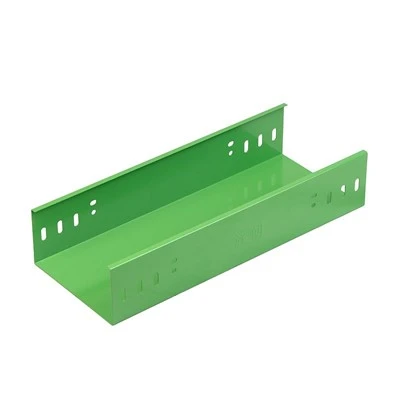
Wait, there’s another big one I almost forgot: powder-coated steel. This is galvanized or steel (usually hot-dip galvanized under the powder for extra protection) with a colored powder finish sprayed on, then baked on to make a hard, smooth coating. Why would you use this? Two main reasons: appearance and extra protection. If you’re running cable trays in a place where people will see them—like a lobby, a retail store, a modern office building—you don’t want that drab gray steel or silver aluminum hanging from the ceiling. Powder coating comes in every color under the rainbow, so you can match it to the building’s trim, ceiling tiles, or brand colors. It also gives extra scratch resistance, so it protects the tray underneath even if it gets banged around a little. The only catch here is that if the powder gets chipped or scratched deep down to the steel, that spot can rust—so you’ve got to be careful with it in super harsh environments, but for indoor, visible spots, it’s perfect. I’ve done a bunch of coffee shops and modern co-working spaces where they wanted black or white trays that didn’t clash with the decor, and powder-coated is exactly what we supplied.
Hold on, do we ever use plastic for trough cable trays? Yeah, but not as often as people think. There are PVC and fiberglass (GRP, or glass-reinforced plastic) trays out there, and they have their place. PVC is super cheap and lightweight, but it’s only for dry, indoor use—direct sunlight makes it brittle, and chemicals will eat it. Fiberglass is way better, more durable, resistant to chemicals and sunlight, and non-conductive, which is a big plus. Wait, non-conductive? That means if the cables in the tray accidentally short out, the tray won’t conduct electricity and cause a bigger fire or shock hazard. So why not use fiberglass everywhere? It’s more expensive than standard steel, and it’s not as strong as metal if you have super heavy cable loads, like hundreds of power cables. I usually only recommend fiberglass for small, low-load jobs or places where non-conductivity is a must, like explosive environments (gas stations, chemical storage areas) where a spark from a metal tray could cause a disaster. Most of the time, metal is still the go-to.
Now, let’s talk about what happens when you pick the wrong material, because I’ve seen enough mistakes to write a whole blog (wait, that’s exactly what this is). I had a customer a few years back who installed electro-galvanized trays for a 2-year outdoor patio restaurant in Florida. By the end of the first summer, the salt air had eaten through the thin zinc coating, and the trays were rusted so bad they were falling apart. He had to rip them all out and replace them with hot-dip galvanized, which cost him double the original price plus extra labor. Another client tried aluminum trays for a heavy industrial warehouse with lots of big power cables—they bent under the weight in just 6 months, and he had to add extra supports every 5 feet, which ended up costing more than if he’d just gone with galvanized steel in the first place.
So what’s my advice? Let’s keep this quick, no overcomplicating:
- If it’s indoor, dry, regular use (office, basement, server room): go hot-dip galvanized steel—affordable, durable, works for everything. If you want it to look nice, go powder-coated.
- If it’s outdoor, coastal, or needs lightweight: aluminum—saves on labor and support, resists rust way better than steel.
- If it’s harsh environment (chemicals, food processing, explosives): stainless steel or fiberglass—don’t cut corners here, it will save you money long-term.
- Never use electro-galvanized outside—trust me on this.
At the end of the day, the material of your trough cable tray isn’t just a boring detail. It affects how much you pay upfront, how much you spend on installation and repairs, how long the tray lasts, and even the safety of your space. I’ve been doing this for long enough that I can look at a job site and tell you exactly what material you need, no guesswork. If you’re not sure what’s right for your project—whether you need 100 feet for a small office or 10,000 feet for a warehouse—hit me up and let’s chat. No sales pitch, just real advice based on what works in the real world.
Stainless Steel Cable Tray References:
- National Electrical Manufacturers Association (NEMA). "Cable Tray Materials and Installation Guidelines." NEMA Standards Publication, 2021.
- Steel Tube Institute. "Galvanized Steel for Structural and Electrical Applications." Technical Brief, 2022.
- Aluminum Association. "Aluminum Cable Tray: Benefits and Application Considerations." Industry Report, 2023.
- Stainless Steel Development Association. "Stainless Steel for Corrosion-Resistant Cable Trays." Product Guide, 2021.
- Fiberglass-Reinforced Polymer Association. "GRP Cable Tray for Harsh Environments." Application Manual, 2022.
Hebei Jinglang Industrial Co., Ltd.
As one of the most professional trough cable tray manufacturers and suppliers in China, we also support customized service. We warmly welcome you to wholesale high quality trough cable tray in stock here from our factory. If you have any enquiry about quotation, please feel free to email us.
Address: Nanxinzhuang Village, Daweihe Hui and Manchu Township, Wen’an County, Langfang City, Hebei Province
E-mail: wei32830@gmail.com
WebSite: https://www.jinglangcabletray.com/
