Hey there, if you’ve ever wondered how those crisp, perfectly shaped metal bits for your car’s door panels, appliance brackets, or even your phone’s internal components get made, chances are blanking in stamping parts is the unsung hero you’ve been overthinking (or maybe not thinking about enough). As a stamping parts supplier that’s been grinding through prototypes and production runs for over a decade, I’ve lost count of how many times new clients hit me up going, “Wait, blanking? Isn’t that just cutting metal?” Nah, fam—this is the foundation of almost every stamping part that’s not a weirdly twisted, complex bend, and getting it right can make or break your entire project. Let’s break this down like I would over a coffee in our shop, no stuffy engineering jargon that makes your eyes glaze over. Stamping Parts
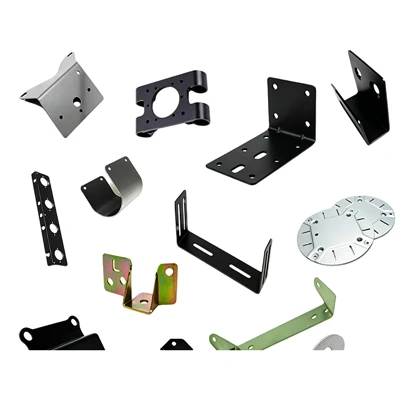
First, let’s get the basics straight, but not the textbook ones that feel like reading a instruction manual for a toaster. Blanking is the first step in almost all progressive stamping or custom stamping jobs—it’s the process of cutting a flat, exact “blank” (that’s the raw metal piece you’ll build the final part from) from a larger sheet of metal. Think of it like using a cookie cutter, but way more precise and way less fun than cutting sugar cookies for a kid’s bake sale. The cookie cutter here is a set of sharp, hardened steel dies—one punch (the top part that hits down) and one die cavity (the bottom part that catches the metal). When the press slams the punch down onto the sheet metal, it shears the metal exactly along the shape you want, leaving you with that perfect blank. The leftover bits? We call them “skeletons” or “offcuts,” and we either recycle ’em or reuse ’em for smaller parts if we can—we’re big on not wasting metal here, both for the planet and for our clients’ budgets.
Wait, hold on—there’s a key difference here that a lot of new buyers mix up: blanking isn’t the same as piercing, notching, or trimming. Let’s clarify that real quick because this is where mistakes happen. Piercing is when you punch a hole in a part, right? The leftover metal from that hole is scrap. Notching is cutting out a small piece from the edge of a part, still leaving the main blank intact. Trimming is cutting extra material off a finished part after it’s been formed or bent, to get the final edge right. Blanking? We’re cutting out the entire, full shape of the part in one go from the sheet, so that entire cut piece is the blank we use for the next steps (bending, drawing, coining, whatever your part needs). That’s a big deal—get the blank wrong, and you can skip the rest of the steps entirely, which is why we spend so much time calibrating our dies before production runs.
Now, let’s talk about how this actually works in the real world, not a lab. First step for us as a stamping supplier: we get a drawing or CAD file from you, our client. First thing we do is tweak that drawing to make it blank-optimized. Wait, why? Because if you draw a part that’s a weird, lopsided hexagon, we can’t just cut that from a sheet without wasting half the metal. So we adjust the blank shape to be as close to your final part as possible, with tiny gaps called “nesting gaps” between blanks so the dies don’t collide, and we arrange all the blanks on the sheet like a puzzle to minimize scrap. This is called sheet nesting, and it’s one of the easiest ways we can cut your material costs—save you 10% on metal, and you’re not only paying less for parts, you’re making your production line run faster too.
Next, we pick the right metal for the blank. This isn’t just grabbing a random sheet from the rack. If you’re making a bracket for a fridge that needs to hold 50 pounds, we’re using 16-gauge steel, not thin aluminum that bends the second you touch it. If you’re making a battery tab for a electric car that needs to be super conductive, we’re using pure copper or nickel-silver alloy. The blank’s material grade, thickness, and even the surface finish (like shiny vs. matte) all affect how we set the blanking dies. For example, thin foil (like for phone parts) needs a super sharp punch and die gap that’s only a fraction of the metal’s thickness—too big a gap, and the blank will have ragged edges that don’t fit later steps. Thick steel for a truck frame part needs a wider gap so we don’t break the punch mid-run.
Then there’s the die setup, which is where our team’s 20+ years of experience comes in. The punch is made of hardened tool steel, same as the die, because it’s slamming into metal hundreds of times a minute—soft steel would bend or chip in 50 parts, max. We calibrate the press speed too: fast for thin, easy-to-cut metals, slower for thick, tough stainless steel that can crack if we hit it too hard too fast. Wait, and there’s a thing called “die clearance” I mentioned earlier—this is the tiny space between the punch and die edge, and it’s usually 5-15% of the metal thickness. Get this wrong, and the blank has what’s called a “burr” or “rollover.” A burr is that sharp, jagged edge left when the metal isn’t sheared all the way clean, and a rollover is the curved edge at the top of the punch. Both are bad—if your blank has a burr, it can scratch the paint on a car door, or cause a short in an electronic part. We check every single blank at the start of a production run with a caliper and a magnifying glass, and we adjust the die in real time if we see even a tiny burr forming—no excuses for sending out parts that don’t meet specs.
Now, what makes blanking so important for stamping parts overall? Let’s tie this back to why you, our client, should care. A lot of people think the bending or forming steps are the hardest, but if your blank is off by 0.001 inches, you can’t bend it to fit, or it’ll be too small to assemble. I’ve had clients come to us after messing up a blanking job with another supplier, and their parts were 0.005 inches too short, so they had to re-do their entire assembly line because every bracket was the wrong size. Blanking is the baseline—get that right, and the rest of the stamping process is smooth. Mess it up, and you’re looking at wasted material, delayed delivery, and extra costs that no one wants.
Also, blanking is flexible, which is why it works for everything from 10-piece prototype runs to 100,000-piece production runs. If you’re a startup making a new smart appliance, we can make a custom blanking die for your small prototype run, no need for a million parts upfront. If you’re a big auto manufacturer needing 50,000 identical door hinges, we can set up a progressive blanking die that cuts blanks, feeds them through the press, and moves them to forming steps all in one line, so you get parts fast and cheap. We’ve done runs as small as 50 blanks for a custom robotic arm part, and as big as 200,000 blanks for HVAC components—each time, we adjust our blanking process to fit your needs, not the other way around.
Wait, let’s talk about common mistakes we see (and help clients avoid) when it comes to blanking. First, skipping the blank optimization step we mentioned earlier. A client once sent us a CAD file for a bracket that was a weird, irregular shape, and they didn’t want to adjust it because “that’s what the design needs.” We explained that we could tweak it slightly to fit a sheet better, saving them 12% on metal costs, but they insisted. They ended up using 18% more metal than they needed, and their total part cost went up 15%—all because they refused to let us optimize the blank. Second, not accounting for the blank’s edge quality. Another client tried to make their own blanks with a laser cutter for a small run, and the edges had a tiny burr that caused their electronic parts to short. Blanking with a press gives a far cleaner, more consistent edge than laser cutting for most stamping parts, especially for high-volume or precision parts. Third, using the wrong die clearance for the metal. We had a client use aluminum blanks for a bike frame part, and the supplier used a steel die gap meant for thick stainless, so the blanks had huge rollover edges that made the frames sit unevenly on the bike.
Now, as a stamping parts supplier, how do we make sure our blanking process is top-notch? Let’s give you a peek behind the curtain. We have a dedicated quality control team that checks every batch of blanks for dimensions, edge quality, and burr size—no exceptions. We use CNC-controlled presses that can calibrate pressure and speed to within 0.001 psi, so every blank is identical. We also keep every die we make properly lubricated and sharpened, because a dull die is the #1 cause of bad blank edges. And for prototype runs, we send you a sample blank within 24 hours of getting your CAD file, so you can check it fits your design before we go into full production—no surprises, no delays.
At the end of the day, blanking is all about precision and consistency. Whether you need a small custom blank for a medical device or a mass-produced blank for a commercial appliance, getting this step right is non-negotiable. It’s not just cutting metal—it’s building the foundation of your entire stamping part, and as a supplier, that’s what we care most about.
If you’re working on a new project, or you’ve had issues with blanked parts from another supplier, we’re here to help. We can take your CAD file, optimize your blanks for cost and performance, send you a free sample to test, and quote you a fair price for your run, no hidden fees. Hit us up to connect, and let’s talk about how we can make your next stamping project run smooth.
Stamping Parts References:
- Digital Press. (2022). "Blanking Fundamentals for Metal Stamping." Stamping Industry Digest.
- Groover, M.P. (2020). Fundamentals of Modern Manufacturing: Materials, Processes, and Systems (7th ed.). Wiley.
- Metal Stamping Association. (2021). "Best Practices for Blank Design and Blanking Operations." Technical Report.
Jianhu Yuhua Machinery Manufacturing Co., Ltd.
As one of the most professional stamping parts manufacturers and suppliers in China, our products have good reputation in the market. Please rest assured to buy durable stamping parts made in China here from our factory.
Address: No.1 Peiliu South Street, Lugou Town, Jianhu County, Yancheng City, Jiangsu Province, P.R.China
E-mail: 13770213655@163.com
WebSite: https://www.yuhuamfg.com/
