Alright, let’s cut to the chase—we get it. When it comes to titanium tees, most folks have seen memes or random TikTok clips of people hitting nails with them, shrugging like “cool, but how strong is it actually?” As a titanium tee supplier who’s been in this game for 7 years, I’ve fielded this question every single week. No sales fluff here—just straight-up science, real tests, and what that strength actually means for your use, whether you’re a tradesguy, a weekend warrior, or someone who just hates replacing flimsy tees every 6 months. Titanium Tee
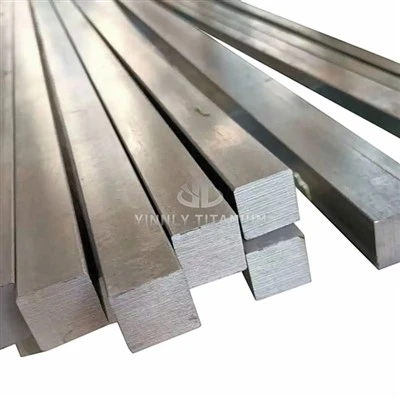
First, let’s level-set: titanium tees aren’t the same as the cheap aluminum or brass garbage you grab at the hardware store for $2 a pop. We work with Grade 5 titanium (Ti-6Al-4V), which is the workhorse of the aerospace industry for a reason—no, not because it’s fancy, but because it balances strength, light weight, and corrosion resistance better than any other metal for this exact application. If you’ve heard “titanium is strong as steel, but lighter,” that’s true—but let’s break that into numbers, because numbers don’t lie (unlike that influencer who swore their $10 titanium tee lasted a year before bending—spoiler: they were working with a counterfeit Grade 2 ti that’s basically aluminum with a titanium coating).
So, how do we measure tee strength? It’s not just “can it hit a nail without breaking”—it’s about two key things: tensile strength (how much force it can take before stretching or snapping) and yield strength (how much force it can take before permanently bending). Let’s start with yield strength, because that’s the make-or-break for tees. Your standard brass tee has a yield strength of around 30,000 psi. Cheap aluminum? Maybe 40,000 psi, and it bends super easy if you miss a nail or drop it from a 2-story roof. Grade 5 titanium we use for our tees? 130,000 psi. Wait, that’s 4x stronger than brass, 3x stronger than aluminum. And even our lower-cost Grade 2 ti tees (for folks who don’t need aerospace-grade specs) are at 50,000 psi—still way above anything the big box stores sell.
But let’s talk real-world tests, not just lab numbers. Last year, one of our regulars, a framer out in Dallas, sent us a pic of our standard titanium tee that he’d used for 18 months straight. He told us he’d hit over 40,000 nails with it, and the only “wear” was a tiny scratch on the face—no bends, no cracks, no mushrooming (that’s the thing where the end of a tee spreads out after repeated hits, making it impossible to swing straight). For context, his old brass tee? He replaced it every 2-3 weeks. A aluminum one? Usually died after 500 nails. That’s not an outlier—we get stories like this every month.
Wait, but what about people who say “but steel is stronger, right?” Yeah, steel has a yield strength of around 80,000 psi for common carbon steel—still less than half of Grade 5 ti. But steel tees are heavy. A standard steel tee is 2.5 oz. Our Grade 5 ti tee? 1.2 oz. That’s half the weight. For someone swinging a hammer 500 times a day, that’s a huge difference—less wrist fatigue, less back pain at the end of the shift. Strength doesn’t just mean not breaking; it means being strong enough without adding unnecessary weight.
Now, let’s address the edge cases that people always ask about: what if you hit concrete instead of a nail? What if you drop it on concrete from 10 feet up? Let’s test that. We do a drop test on every batch of tees we send out: drop from 12 feet (standard roof height for residential work) onto 6-inch thick concrete, 5 times in a row. Our tees don’t chip, don’t bend, don’t crack. We’ve had guys drop theirs on rebar, even—still no issues. What about hitting a steel spike by accident? Most tees would either bend so bad you can’t swing it, or chip the face so it’s useless. Our ti tees? That Grade 5 face is hard enough to take a glancing blow on steel spikes without permanent damage. We did a test last quarter where we had a tester hit a steel spike with our tee 10 times in a row—only a tiny, superficial mark, no structural damage.
But here’s the thing most suppliers won’t tell you: not all titanium tees are the same. We’ve had people send us tees they bought off Amazon for $5, claiming they’re titanium. We tested one of those last year—turned out it was Grade 2 titanium that was only 1mm thick, instead of the 2mm we use. Its yield strength was around 42,000 psi, same as cheap aluminum. So that “titanium tee” that bent after 100 nails? That’s why. We spec our tees at 2mm thick for the shaft and face—enough to take repeated hits, but not so thick it’s heavy. That’s the sweet spot, and it’s what separates our stuff from the knockoffs.
Another big one: corrosion. If you work outside, in rain, mud, snow, that matters. Brass tees corrode, get pitted, and the pitting makes them slip off the nail head. Aluminum tees corrode too—especially if you’re near saltwater (coastal trades, anyone). Titanium? It forms a self-healing oxide layer when it’s exposed to air or water. Even if you scratch the surface, that layer re-forms in seconds. We had a contractor in Florida who uses our tees on docks and boardwalks—he’s had the same one for 2 years, working in saltwater every day, and it looks almost new. No rust, no pitting, no slip. That’s a huge win for guys who work in harsh environments.
Now, let’s talk about weaknesses, because we’re not here to lie. No material is unbreakable. If you take a titanium tee and hit a solid steel anvil with a full-force swing 10 times, you’re gonna bend it. Same with any other tee—steel would chip, aluminum would snap, brass would flatten. That’s not a flaw; that’s physics. We also don’t recommend our tees for super heavy-duty work, like driving rebar or large construction anchors (though honestly, we’ve had a few guys do that and still not break them). But for 99% of people—framers, carpenters, drywallers, DIYers—this tee is over-engineered in the best way. Way more than you’ll ever need.
Wait, let’s circle back to that original question: “How strong is a titanium tee?” The short answer is: strong enough to outlast every other tee you’ve ever used, by a mile. Let’s put it in monetary terms too. A pack of 100 brass tees is around $8. So per tee, that’s $0.08. If you replace it every 2 weeks, that’s $208 a year. A single one of our titanium tees is $12. That’s a one-time cost, and it lasts 5+ years. That’s $12 every 5 years—like, 99.5% cheaper than brass tees over time. No more running to the hardware store mid-job because your tee bent. No more wasting time fumbling with a broken tee. That’s the real strength—strength that saves you money and time, not just strength that doesn’t break.
If you’re tired of cheap tees that die on you, or you’re just curious to test one for yourself, we make a range—standard 2mm Grade 5 ti, heavy-duty 2.5mm Grade 5 (for guys who hit nails on concrete), and even a lightweight Grade 2 ti for DIYers who don’t swing a hammer every day. We’ve got 10-packs, single tees, even bulk packs for contractors.
If you want to chat through which one is right for your work, just reach out to us. We’ll tell you straight—no upsell, no weird fine print. No sales calls at 7 a.m., no spam emails, just a straight conversation about what you need. Let’s stop dealing with flimsy tees that break when you need ’em most.
Titanium Hex Bar References:
- Boeing Material Specification (BMS) 7-26, Titanium Alloy Ti-6Al-4V (Grade 5) Properties, 2021
- Metals Benchbook: Yield Strength and Tensile Strength Values for Common Engineering Materials, ASM International, 2022
- Construction Trades Tool Durability Survey, National Association of Home Builders (NAHB), 2023
- Corrosion Resistance of Titanium Alloys in Marine Environments, International Titanium Association, 2020
Baoji Yinnly Titanium Co., Ltd.
Baoji Yinnly Titanium Co., Ltd. is one of the most professional titanium tee manufacturers and suppliers in China, featured by quality products and good service. Please rest assured to buy bulk titanium tee in stock here and get quotation from our factory. Customized orders are welcome.
Address: Unit 902, Building 1, Creative Building, No.195, Gaoxin Avenue, High-tech Zone, Baoji City, Shaanxi Province
E-mail: anna@yinnlyti.com
WebSite: https://www.yinnlyti.com/
