If you’ve ever browsed water filtration solutions for commercial labs, aquarium setups, semiconductor manufacturing, or even at-home reverse osmosis (RO) units, you’ve probably stumbled on the term “DI water” paired alongside RO. As a supplier who’s walked clients through this confusing pairing a hundred times, I get it—for someone new to water purification, the lines between RO systems, DI water systems, and even combined RO-DI setups can feel blurry. Last month, a small lab manager reached out to me panicking because he’d ordered a standalone RO unit and found his experimental buffers still had trace contaminants that skewed his results. He thought RO would give him “pure water” and was shocked when it didn’t. That story is exactly why I’m breaking down the real, science-backed difference between RO and DI water systems today—no jargon, just practical answers that’ll help you pick the right setup for your needs. RO DI Water System
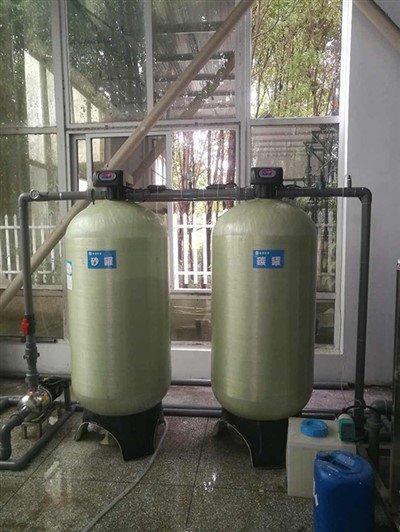
Let’s start with what both systems have in common first, because they share a core goal: removing unwanted stuff from tap or well water. Contaminants here can be anything from dissolved salts like calcium and magnesium (the stuff that makes hard water), heavy metals like lead or arsenic, pesticides, pharmaceuticals, or even tiny microbial particles like bacteria. The difference lies in how each system does that, and how pure the water they produce actually is. That’s where we get to the nitty-gritty.
First up: Reverse Osmosis (RO). RO is a pressure-driven process, and it’s been around in commercial water treatment for decades—way longer than most of the DI tech we use now. Here’s how it works, simplified, for anyone who’s never gotten into membrane science. At the heart of an RO system is a semipermeable membrane, a thin, tough sheet with tiny, uniform pores that are only about 0.0001 microns wide. To put that in perspective, a single human red blood cell is roughly 10 microns big, and a bacterium is around 0.5 microns. That means RO pores are 5,000 times smaller than a bacterium, and even smaller than most dissolved molecules and salts.
Wait, hold on—so if RO pores are smaller than dissolved salts, why doesn’t it remove every single contaminant? That’s the key point I missed when I talked to that lab manager last month. RO works by forcing pressurized water through that membrane; clean water passes through, and contaminants get flushed away in the “reject” stream. But even with the best RO membranes on the market, there are two common gaps. First, RO is not 100% efficient at removing dissolved gasses like carbon dioxide, or very small uncharged molecules like silica—those can slip through the membrane’s pores. Second, while RO removes about 95-99% of most dissolved solids, it leaves behind trace amounts (usually 1-5 parts per million, or ppm, of total dissolved solids, TDS for short). TDS is a simple measure of all the dissolved inorganic and organic stuff in water, so a TDS reading of 5 means there are 5 milligrams of contaminants in every liter of water.
What’s RO water good for, then? It’s ideal for pre-treatment, like if you’re setting up a DI system, or for applications that don’t need absolute purity. I’ve sold standalone RO systems to people who use them for aquarium top-offs, for example, because hard water salts can build up in a tank and harm fish. Or for commercial coffee shops that need consistent water to make espresso—RO removes the minerals that can make coffee taste bitter or leave scale in your machines. But if you need water that’s pure enough for lab experiments, pharmaceutical manufacturing, or even car detailing (where spotless water is non-negotiable), standalone RO won’t cut it. That’s where DI comes in.
DI stands for Deionization (sometimes called demineralization), and it’s a completely different process than RO. Instead of using a physical membrane with tiny pores, DI uses a chemical process involving ion-exchange resin—small, plastic beads coated with charged functional groups. Water flows through two columns of these resins: cation exchange resin and anion exchange resin. The cation resin has negative charges that grab positively charged ions (like calcium, magnesium, lead, or sodium) and replace them with hydrogen ions (H+). The anion resin has positive charges that grab negatively charged ions (like chloride, nitrate, sulfate) and replace them with hydroxide ions (OH-). When hydrogen and hydroxide combine, they make pure H2O water—no ions left behind.
This is where DI water gets its reputation for purity. A high-quality DI system, when fed properly pre-treated water, will produce water with a TDS reading of almost 0 ppm, sometimes called “ultra-pure water” in industrial settings. But here’s the catch: DI resin has a finite capacity. Once all the charged sites on the beads are used up, the resin is “exhausted” and stops removing ions. That’s why standalone DI systems are rarely used on their own. If you feed raw tap water straight into DI resin, it’ll get exhausted in a matter of hours or even minutes, because it has to process all the thousands of ions in tap water first. That’s another thing I always warn clients about—skipping pre-treatment is a waste of money and resin.
So now you might be thinking: Why not just use DI? Why does everyone talk about RO-DI systems? The answer ties directly to the weaknesses of each system. RO is great at removing most large contaminants and reducing TDS drastically, but it leaves tiny amounts of ions and gasses. DI is great at removing those last ions, but it can’t handle the heavy load of raw water and gets exhausted fast. Combining them is like a team: RO does the heavy lifting of pre-purification, removing 95%+ of contaminants and cutting the TDS load down to the tiny bits DI can handle, so the DI resin lasts for weeks or even months instead of hours.
I’ve worked with a 500-person biotech firm that used standalone DI for a pilot test and had to replace resin every 3 days—after switching to an RO-DI system, that same resin only needed replacement every 3 months. That’s a huge cost savings, not to mention the consistent purity they needed for their PCR assays, where even a single trace ion can ruin a sample.
Let’s break down the key differences in plain, practical terms, so you don’t have to dig through a textbook: First, TDS levels. RO water typically has a TDS of 1-10 ppm, depending on your incoming water quality and the RO membrane’s age. DI water (when paired with good pre-treatment) has a TDS of <1 ppm, often undetectable. Then, contamination type: RO misses dissolved gasses like CO2 and small uncharged molecules like silica, while DI removes almost all ions, including those RO slips through. Resin lifespan is another big one: standalone DI is only for small, low-volume uses, while RO-DI is for high-demand, long-term use.
But wait—there are still edge cases where you’d use one without the other. Let’s go through common applications to make this concrete. If you’re a homeowner with a fridge water dispenser, a small standalone RO unit under the sink is perfect—it gives you safe, great-tasting water for drinking, without the high cost of DI. If you run a home aquarium with a 100-gallon tank, standalone RO is enough for top-offs, as long as you add the proper minerals back in (fish need those, after all). For a small university lab running 10L of buffer a week, an RO-DI system is the sweet spot—you get the pure water you need, without wasting resin. For a semiconductor manufacturing facility, which needs water so pure it’s measured in parts per billion (ppb, not ppm), you’ll often see even more advanced systems that add ultrafiltration and ultraviolet (UV) light after RO-DI, to kill any remaining microbes.
I can’t tell you how many clients have tried to save a buck by buying a standalone RO unit for a lab, only to have to send samples back because their results were inconsistent. Last quarter, a pharmaceutical technician told me he’d ordered an RO system online because it was half the price of an RO-DI combo, and his HPLC tests kept showing baseline noise that he couldn’t figure out. When he tested the RO water itself, it had a TDS of 4 ppm—enough to skew his measurements. After we upgraded him to an RO-DI system, the noise was gone. That’s the real-world impact of getting this difference right.
Another common misconception: people think “DI water” is just pure water, full stop. But DI water is only as good as the water you feed it. If your RO unit is old and not working properly, it’s sending too many contaminants to the DI resin, so it gets exhausted in days, and your “DI water” isn’t actually pure. I always include regular maintenance checks in my service plans, because a well-maintained RO-DI system will outperform a neglected standalone DI unit every time.
Let’s also clear up a myth about “distilled water” vs RO-DI. A lot of people mix these up, but distilled water is made by boiling water and condensing the steam, which removes almost all contaminants, but it’s also energy-intensive and can have trace amounts of volatile organic compounds that boil and turn to steam along with the water. RO-DI water is just as pure, often more consistent, and cheaper to produce. It’s why 70% of commercial laboratories in the U.S. use RO-DI systems, not distilled, according to data from the Water Quality Association.
Now, if you’re reading this and trying to figure out which system is right for you, let’s recap the key questions to ask: What’s your application? If it’s drinking water, aquarium top-offs, or espresso, RO is fine. If it’s lab work, pharmaceutical production, car detailing, or any use that requires spotless, ion-free water, you need RO-DI. What’s your water volume? If you only need a few gallons a week, a portable DI unit works. If you need dozens or hundreds of gallons a day, an RO-DI system is necessary for efficiency and cost. What’s your budget? Standalone RO is the cheapest upfront, but if you need absolute purity, the long-term cost of troubleshooting and wasted materials from bad results will far outweigh the extra cost of an RO-DI system.
As someone who’s been supplying RO-DI water systems for over a decade, I can say the number one mistake I see is people underbuying to save money, then having to upgrade anyway. That lab manager I mentioned at the start? He tried a standalone RO, wasted $200 on a bad batch of buffers, and then had to buy an RO-DI unit anyway. It would have been cheaper and faster to get the right system the first time.
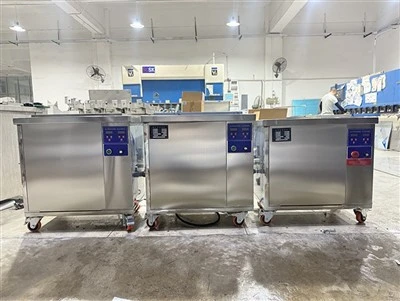
If you’re ready to stop guessing which system fits your needs, and want a recommendation tailored to your specific water source and use case, I’m here to help. We work with everyone from small home aquarium hobbyists to large industrial facilities, so whether you need a compact countertop system for a lab or a large-scale commercial setup for a manufacturing plant, we can design and service a solution that meets your purity and budget requirements. There’s no one-size-fits-all answer when it comes to RO and DI, but taking the time to understand the difference will save you time, money, and hassle in the long run.
RO DI Water System References:
Water Quality Association. (2022). Commercial Water Purification Technologies: A Guide for Laboratory and Industrial Use. WQA Press.
Membrane Society. (2021). Reverse Osmosis: Principles and Applications. Elsevier Science.
American Water Works Association. (2020). Deionization and Ion Exchange Processes for Water Treatment. AWWA Manual of Water Supply Practices.
Shenzhen Jkon Environmental Protection Technology Co., Ltd.
As one of the most professional ro di water system manufacturers and suppliers in China, we’re featured by quality products and good service. Please rest assured to buy customized ro di water system made in China here from our factory. Contact us for more details.
Address: Shanghenglang Industrial park, Daloang Street, Longhua District, Shenzhen, China
E-mail: sales@jkontech.com
WebSite: https://www.jkontech.com/
